FIFO Couples and Family
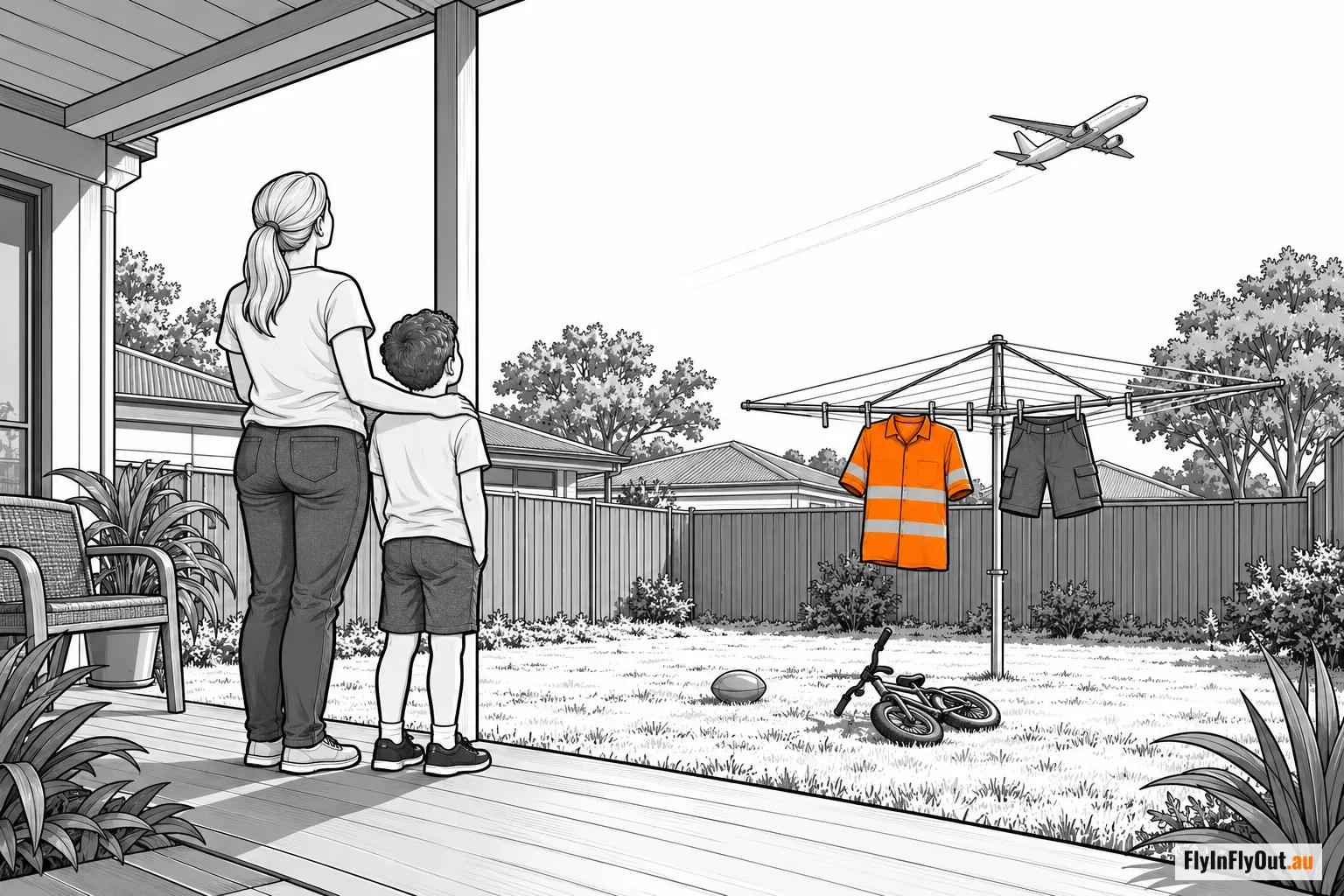
FIFO speeds up whatever your relationship already is. A strong couple can come out of it closer, and a couple already coming apart can find it finishes the job faster. The difference isn't luck.
What makes FIFO harder for a couple?
Short answer
FIFO is harder for a couple because each of you carries a load the other can't see. One has the shifts and the camp; the other has the house and the family alone. The strain sits in that gap more than in the distance.
FIFO is not easy for a single person. There are the hours, the heat, the two weeks of the same faces, the flight home and then the flight back. For a couple it's all of that, plus a second person living a different version of it at home.
One of you is on site working twelve-hour days. The other is running a house, a job and often kids alone, on a different clock, with nobody to hand things to. Neither of you can see what the other one is carrying. That gap is where the trouble starts.
Who decides whether you do FIFO?
Short answer
The decision to do FIFO belongs to both of you, along with the savings target and the exit date. The couples who make it work treat the first conversation as a team meeting: not "I've been offered a FIFO job" but "there's a FIFO opportunity, what do we think?"
That distinction sounds small. It isn't. When one person announces a career move and the other adjusts, the relationship starts uneven and stays that way.
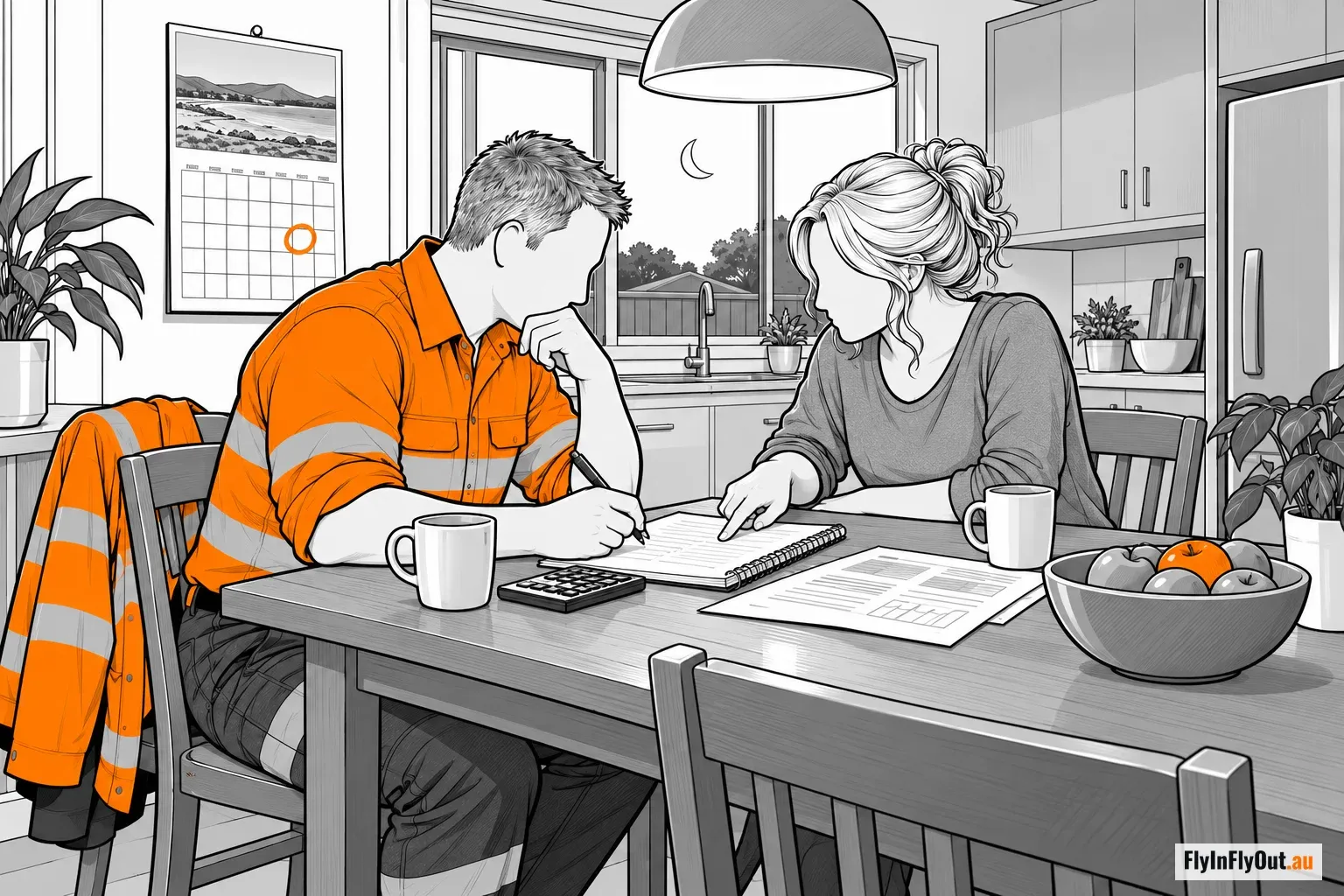
Two things make FIFO a plan rather than a drift: a savings figure you're working towards, and a date you'll stop. Both hold better when both people set them. The savings figure is what makes FIFO a vehicle instead of a trap. The exit date is what stops the golden handcuffs from closing, the point where the pay is too good to leave even though you want to, and it stays real when both people are watching the calendar.
What happens to the partner who stays home?
When one partner flies out, the one who stays behind doesn't get a job title for what they do. But the veteran FIFO wives have a phrase for it: de-facto single parent. And they mean it.
During the swing, the home partner manages everything: the kids, the house, the school calls and the appointments. There's the broken pool pump at 8pm on a Wednesday when the person who usually fixes things is in a donga, the demountable room workers sleep in on site, twelve hundred kilometres away. There's the sick kid at 2am, the dog that got out, and the decision that can't wait two weeks.
You build resilience doing this. You build competence. You learn to handle things you'd never handled before, and you get good at it, because you have to, because there's nobody else.
Independent, but not too independent
Here's the tension that veteran FIFO wives talk about with each other, in a register that deserves to be relayed carefully: you have to become stoic and independent to survive the swings. But you have to actively avoid becoming so independent that the worker feels unneeded when they come home. Build the resilience to run everything, and watch that the running of everything doesn't quietly write them out of the script.
That's a real tension. It doesn't have a clean solution. The couples who navigate it well talk about it openly, before it becomes a problem, not after. The ones who don't talk about it discover, years in, that the home partner runs the household like a solo operation and the FIFO partner has become a visiting guest in their own home.
Which two days cause most of the fights for FIFO couples?
Short answer
The two days that cause most of the fights for FIFO couples are the day before fly-out and the first day home. Veteran couples handle the first with one honest conversation and the second with a 24-hour buffer.
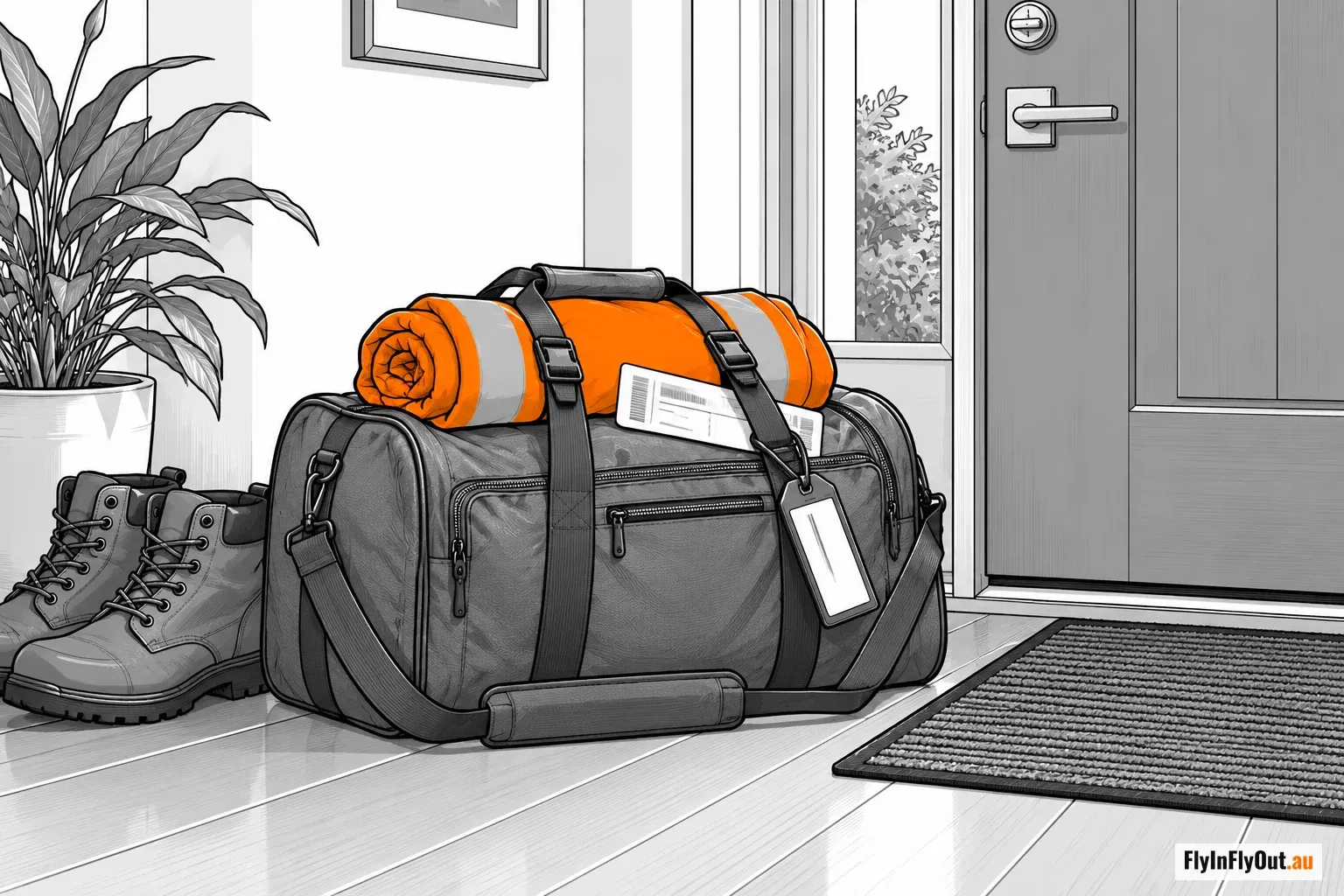
Fly-out dread
The day before the flight, something shifts. It can be a change in mood, a withdrawal, an irritability that arrives the evening before the worker leaves. One partner wrote online that the night before, it felt like he was going back to jail.
Some couples try to put on brave faces. Some pick fights, without meaning to, because anger is easier to leave behind than tenderness. Some go quiet.
The brave faces can be worse than the fights, because they strangle the one conversation that would actually help: "I don't want to go. I'm going anyway. I need you to know both of those things."
Fly-in collision
He walks through the door after fourteen days of twelve-hour shifts. He's exhausted. He needs silence, sleep, and time to come down.
She's been solo-parenting for fourteen days. She's exhausted too. She needs relief, help, and an adult to talk to.
Why it turns into a fight
Both of them have earned what they need. Both of them need it right now. And there isn't enough energy in the house for both needs to be met at once.
This is where the fights happen, and it isn't because either person is wrong. It's because two legitimate forms of exhaustion collide in the hallway, and someone has to go first. The veterans' answer, and it comes up so consistently that I'd call it the consensus, is the 24-hour buffer.
How the 24-hour buffer works
On day one at home, the worker sleeps, eats, and comes down. The home partner continues running the household for one more day. Nobody hands over a chore list. Nobody expects full engagement.
The worker is physically present but not yet operationally home. After twenty-four hours, the handover happens gradually: the worker re-enters the household rhythm, the home partner gets the relief they've been waiting for, and the transition happens on a timeline that respects both kinds of exhaustion.
It sounds simple. It requires more generosity than most people expect, and it can save a lot of fights.
How do couples stop the money becoming a trap?
Short answer
Couples stop the money becoming a trap by agreeing together what it's for: a savings figure and a date to stop, written down and reviewed once a year.
I read about a man online who did more than twenty years of swings on top money and had nothing to show for it. The guilt of always being away turned into spending, and the lifestyle grew because he was never there and the money always was. His partner and daughter filled his absence with things, because things were what the money could buy and presence was what it couldn't.
That's not a financial failure. It's a couple that never sat down and agreed what the money was for.
Set the figure and the date together
The fix is to set the savings figure and the date to stop together, as a shared target rather than one person's. Write it down, agree on it, and review it once a year with three questions: has the lifestyle crept? Is the figure closer? Is the date still real?
That review works better as a conversation between two people than as a solo exercise in front of a spreadsheet.
Can FIFO make a relationship better?
Short answer
FIFO can make a relationship better when the time at home is spent together rather than recovering. One couple credited FIFO with saving their relationship after fifteen years of rosters, though the distance grinds others down.
The hard part is real, but so is the other side.
One couple's fifteen years
I read about one couple, fifteen years into his 2:1 and 8:6 rosters, who called FIFO one of the best things they ever did. He said it saved their relationship, because every R&R (rest and recreation, his days at home) felt like a honeymoon and they never took each other for granted. He also admitted he flew back out before he got too annoying.
She said the separation was hard, and she didn't pretend otherwise. But when he was home, he was truly home. He wasn't walking through the door exhausted at the end of the day and falling asleep on the couch. He was doing the school drop-offs and the daytime assemblies, present in a way most nine-to-five fathers can't be.
That's not a universal experience. Some FIFO relationships are ground down by the distance and never recover. But enough couples write about the good side that the pattern is worth naming: the relationship that gets better because of the absence, not despite it.
How do FIFO couples stay close between swings?
There are three habits, kept short because the veterans keep them short.
Call every day
Call every day. Call even if it's five minutes and nothing happened. The call is the thread.
Have the real conversation before fly-out
Have the real conversation before fly-out, not after. Say the hard thing, that you're going but don't want to, and hear it back. That's better than two brave faces pretending everything's fine.
Give grace on the danger days
Give grace on the danger days. Both of you need it. The dread and the collision are predictable.
Knowing they're coming doesn't prevent them. It just means you don't have to be surprised on top of everything else.
Is FIFO right for you as a couple?
Which couple are you?
| If this sounds like you | FIFO will probably |
|---|---|
| You made the decision together and both know the savings figure and the exit date | Work, and may bring you closer than a nine-to-five would. |
| One of you was offered the job and the other adjusted | Start uneven and stay that way until you have the team meeting. |
| The home partner has friends, family and a life that runs without the worker | Be liveable on the home side, even on a 2:1. |
| The home partner's whole world flies out with the worker | Grind the home partner down first. |
| You already fight on the day before fly-out or the day after fly-in | Keep doing that, unless you name it and build the buffer. |
| The spending has already grown to fit the income | Close the handcuffs. Set the exit date now. |
Four honest questions, for both of you
- Did you decide this together, or announce it? If one person decided and the other adjusted, the team meeting hasn't happened yet. Have it.
- Who handles the 2am emergency, and have you said it out loud? Make sure it's said and agreed, not assumed, including what happens when the thing that breaks is too big for one person, and the other person is on site and can't come home.
- What's your savings figure and your exit date, and do both of you give the same answer? If you don't, the plan isn't shared yet. Build it together.
- What's your plan for the evening before you fly out? If you don't have one, the dread will fill the space. A plan, even a small one, a meal together, a movie, a walk, gives the day a shape that isn't just waiting for the alarm.
Relationships under FIFO strain sit next to the mental health load, and both deserve to be taken seriously. If you or your partner are struggling, with the distance, the transitions, or anything the swing surfaces, support exists: Lifeline (13 11 14), MATES in Mining (1300 642 111) and Relationships Australia (1300 364 277).
Is FIFO right for your family? Six questions. Three minutes. Free.
Is FIFO right for me?