The FIFO Game Plan
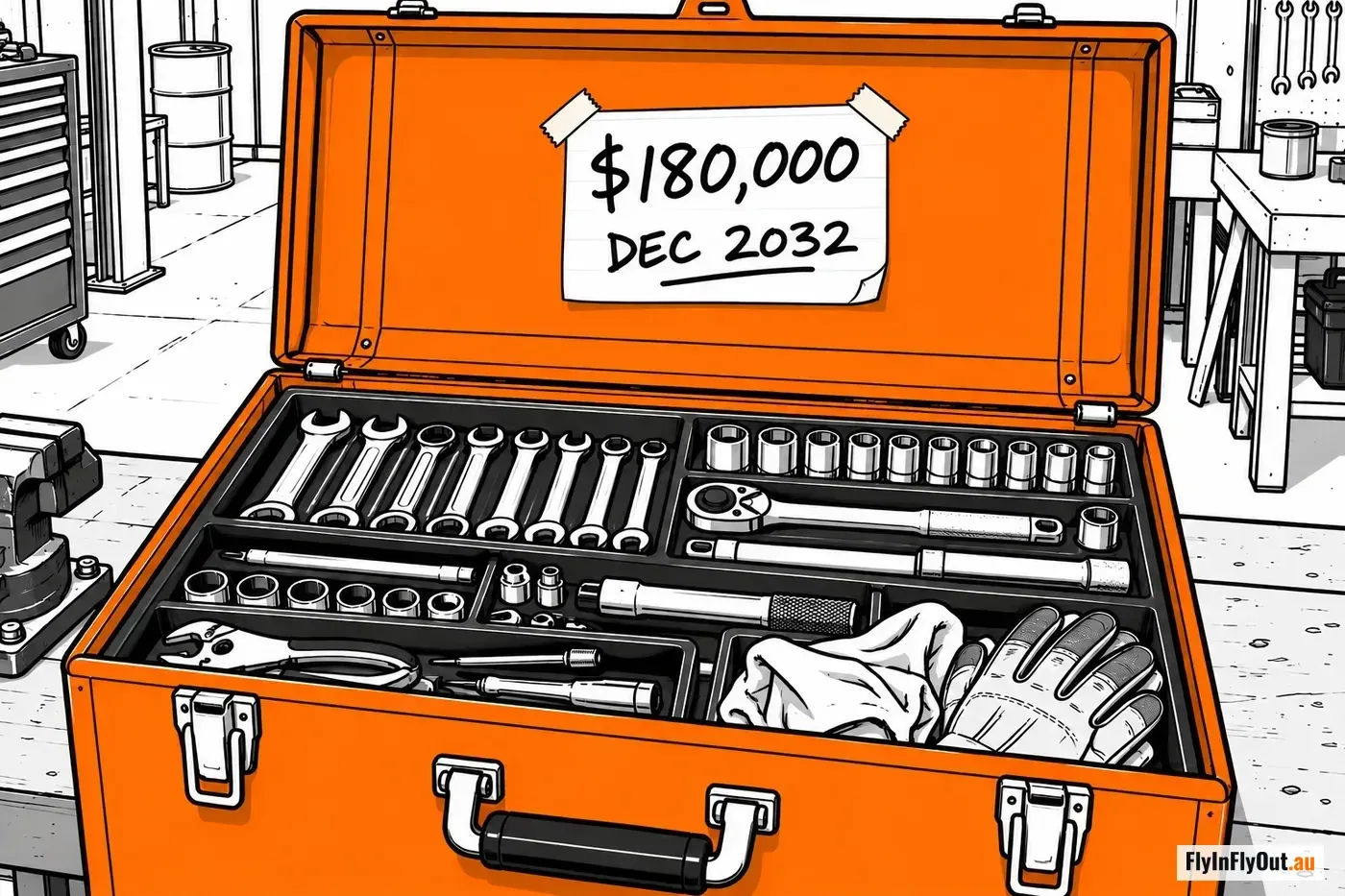
Working FIFO pays well, and that makes it easy to get wrong. The money comes in big lumps, the swings run together, and years can go by with nothing to show. A game plan fixes that: a few decisions made early about the money and the day you stop. If you are starting out, or you are in and it has got away from you, you can still make them.
What a FIFO game plan is
A FIFO game plan is a set of money decisions made early in a FIFO career: what you live on, where the surplus goes and when you stop. It turns a high income into something you keep, before the spending grows to match it.
The FIFO game plan: Where to start
- The money keeps disappearingStart here
- Want to buy propertyStart here
- Want to retire earlyStart here
- Years in and can't see the way outStart here
- Tired, sleeping badly or flat on siteStart here
- Time at home goes wrongStart here
Find help with the plan
The FIFO pay calculator works out what a roster pays after tax, and MoneySmart's budget planner (opens in a new tab), on the government's free money website, shows where it goes. Before you pay a financial adviser, check they are on the Financial Advisers Register (opens in a new tab).
The FIFO game plan at a glance
| Live on | A city wage, with the rest moved out on payday |
|---|---|
| First | Three to six months of living costs in cash |
| Then | An offset account, an index fund or super |
| Property | Your own home before an investment; a mining town house moves with the mine |
| Retiring early | Savings outside super, which opens at 60 |
| The exit | A number and a date, set before you start |
Checked October 2026, against the super rules of the Australian Taxation Office (ATO) for 2026–27. General information, not financial advice.
How do you manage the money in FIFO?
Short answer
Manage FIFO money by living on a normal city wage and moving the rest out of reach automatically on payday. Keep a cash buffer first, and only then put the surplus to work.
I am not a financial adviser, and none of this is advice for your own numbers: a licensed adviser can do that. The steps here match the money tips in a July 2026 article on making the most of your FIFO years (opens in a new tab), published by CPB Financial Planning.
Live on a city wage
The easy mistake is to spend like the pay slip says. CPB's article calls it lifestyle creep, which means your spending rises every time your pay does. The fix is to work out what living costs on an ordinary city salary, and treat everything above that as surplus.
Make the saving automatic
Set up a transfer that moves the surplus on payday, before there is any chance to spend it. Money that has already left your account cannot pay for a bad Friday. The cash buffer comes first because a contract can end or a site can close, and the cash pays the bills while you find the next job.
Where the surplus goes
Once the buffer is there, the surplus can go to three places, and an adviser can tell you the mix that suits you:
- A mortgage offset account: a savings account linked to your home loan, where every dollar in it cuts the interest you pay on the loan
- An index fund: a fund that buys a small slice of the whole share market
- Super: your retirement savings, which you can add to from your pay before tax, called salary sacrifice
Put a number and a date on it
A goal with no date gets spent. Write the amount and the date you want it by on something you look at: the lid of the toolbox works for a tradie, and a note on your phone works for everyone else. CPB's article names a home, a business or early retirement as goals, and says to review the plan regularly.
Say no to the toys
A new ute or a boat on finance is the trap: CPB's article warns off car loans, high-interest credit cards and buy now, pay later. The repayments become the reason you cannot leave. That trap is called golden handcuffs: pay so good, and bills so big, that you cannot afford to stop.
Should a FIFO worker invest in real estate?
Short answer
FIFO worker real estate investment works best in order: the cash buffer first, then your own home, then an investment property if the numbers still work. A house in a mining town is a bet on one mine.
Your own home comes first because it puts a roof over the plan, and an offset account on its loan cuts the interest while your buffer stays in reach. An investment property adds a second loan and a tenant to the plan, so it comes after the first loan is under control.
Buying near the mine
A house near the mine is the tempting buy, because the rents look high. When the last boom ended, house prices in Port Hedland fell almost 75 per cent between 2012 and 2019, ABC News reported (opens in a new tab), and 80 per cent in Queensland's Isaac region, home to the Bowen Basin coal towns. Prices have climbed again since, which is the point: a mining town's houses rise and fall with the mine.
What is an early retirement strategy for a FIFO worker?
Short answer
An early retirement strategy for a FIFO worker needs savings outside super, because super stays locked until 60 for anyone born from July 1964. Super then carries the years after 60.
The ATO's rules on when you can withdraw your super (opens in a new tab) allow only a few special cases before 60. So the years between your last swing and 60 have to come from the rest of the plan: the offset account, the index fund and the number you wrote down.
Salary sacrifice and the cap
Salary sacrifice moves pay into super before tax, which builds your super for later. From July 2026 the yearly cap on these contributions is $32,500, the ATO says (opens in a new tab), and your employer's compulsory super counts towards it, so check how much room is left before you add more.
How do you plan an exit from FIFO?
Short answer
Plan a FIFO exit by deciding before you start what would make you stop: a number saved, a loan cleared or a date. Then check it against your family's wishes every six to twelve months.
Decide it early
The pay is what traps people. With no number and no date, each new year is easier to stay than to leave, and the bills grow to match. The couples and family page has the triggers that work for two people.
Life after FIFO
Life after FIFO is a city wage again, unless the money already pays your way. That's why the plan starts with living on one: if your costs fit a city wage, the last swing is a choice, not a cliff.
If the work stops before you do
Mine work rises and falls with the price of ore and gas, and sites close. A current resume, live tickets and a few contacts on other crews turn a closed site into a gap between jobs. Qualifications that travel, such as a trade or a high-risk work licence (the licence for forklifts and cranes), keep you hireable when a contract ends.
Is a FIFO game plan right for you?
Three honest questions
- Could you live on a city wage while the pay is high? If your bills already match a FIFO pay packet, the first job is cutting them, not saving.
- Does your partner know the number and the date? The plan is shared, and a date only one of you knows is a surprise waiting to happen.
- What would you do in five years if FIFO stopped? If you cannot answer, the tickets and the resume are where to start.
Ready to start the plan?
Write down the number, the date and the amount that moves on payday before the next pay arrives.
Confidential support: Lifeline: 13 11 14. MATES in Mining: 1300 642 111. Relationships Australia: 1300 364 277. 1800RESPECT: 1800 737 732.
A game plan gets you through the swings. Whether the fly-in life suits you in the first place is six more questions: three minutes, free.
Is FIFO right for me?