Is FIFO Worth It?
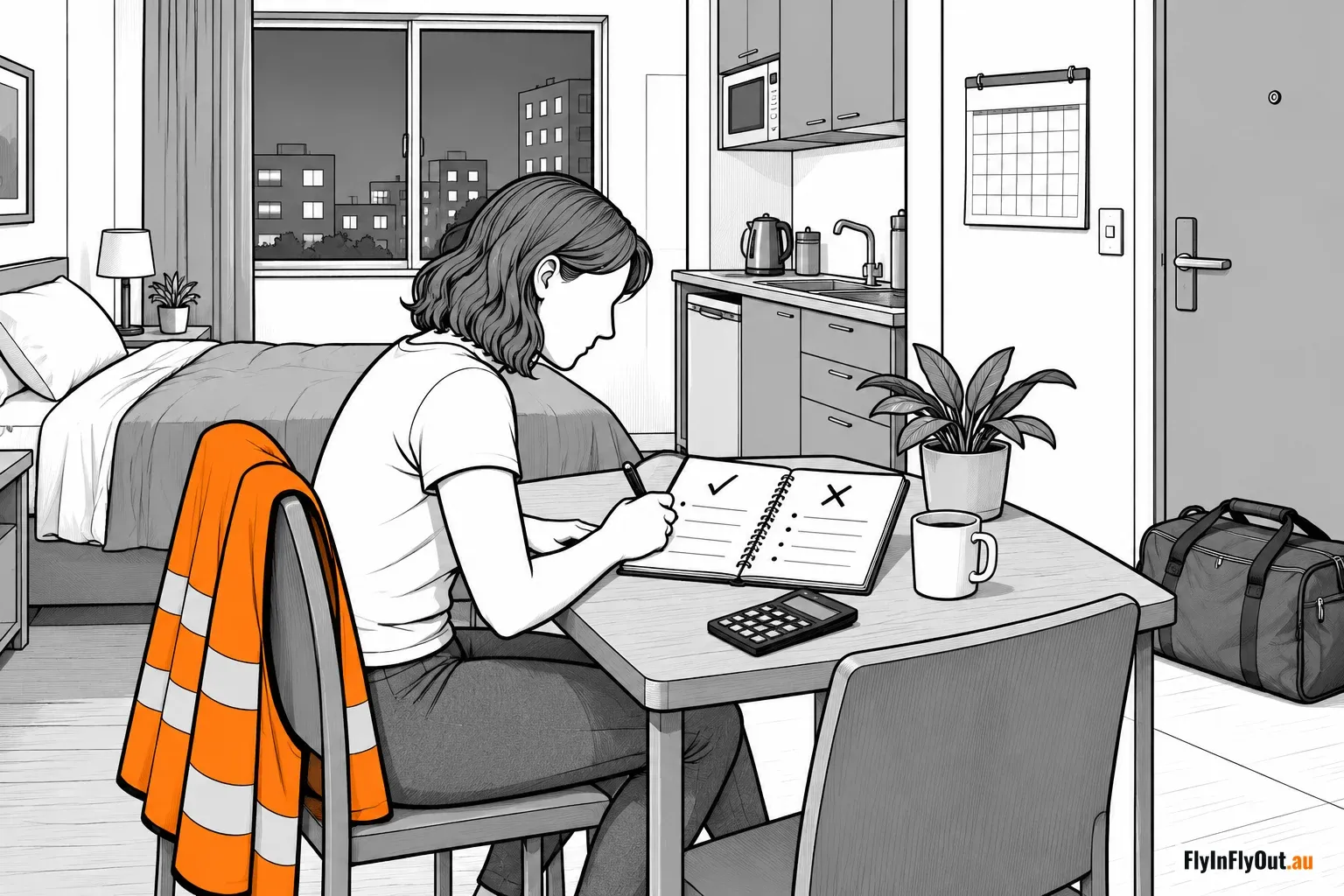
For the right person, with a savings figure and an exit date, FIFO is one of the most realistic ways to change your financial position in Australia. Without those two things, it's a well-paid cage. The difference isn't luck or willpower. It's whether you decided what FIFO was for before you started.
Why do people ask whether FIFO is worth it?
People ask because of a number. It isn't money in general, but one specific number that has sat in your head since you saw it on a job board or in a text from a mate. It might be $130,000, or $140,000, or $150,000, attached to work you could do, or learn to do, in a place you've never been, on a roster that means you'd disappear for two weeks at a time.
The number makes you do the maths you've been avoiding: the rent, the savings, the deposit that gets further away every six months. Then there's the gap between what you earn and what a house costs, which isn't a gap any more. It's a canyon, and being sensible with money isn't closing it.
You're not doing anything wrong. You're on the wrong side of a sum that has no solution at your current salary.
Why the question isn't simple
You ask "is FIFO worth it?", and the question feels simple. It isn't, because most people ask it about the money, and the answer is about everything else. Two stories I read online show the difference.
How do people get trapped in FIFO?
Short answer
People get trapped in FIFO by spending at the level they earn. A mortgage, a ute and a lifestyle sized to a FIFO income can't survive on a city wage, so the worker who wants to come home can't. The job was the income, and the spending became the cage.
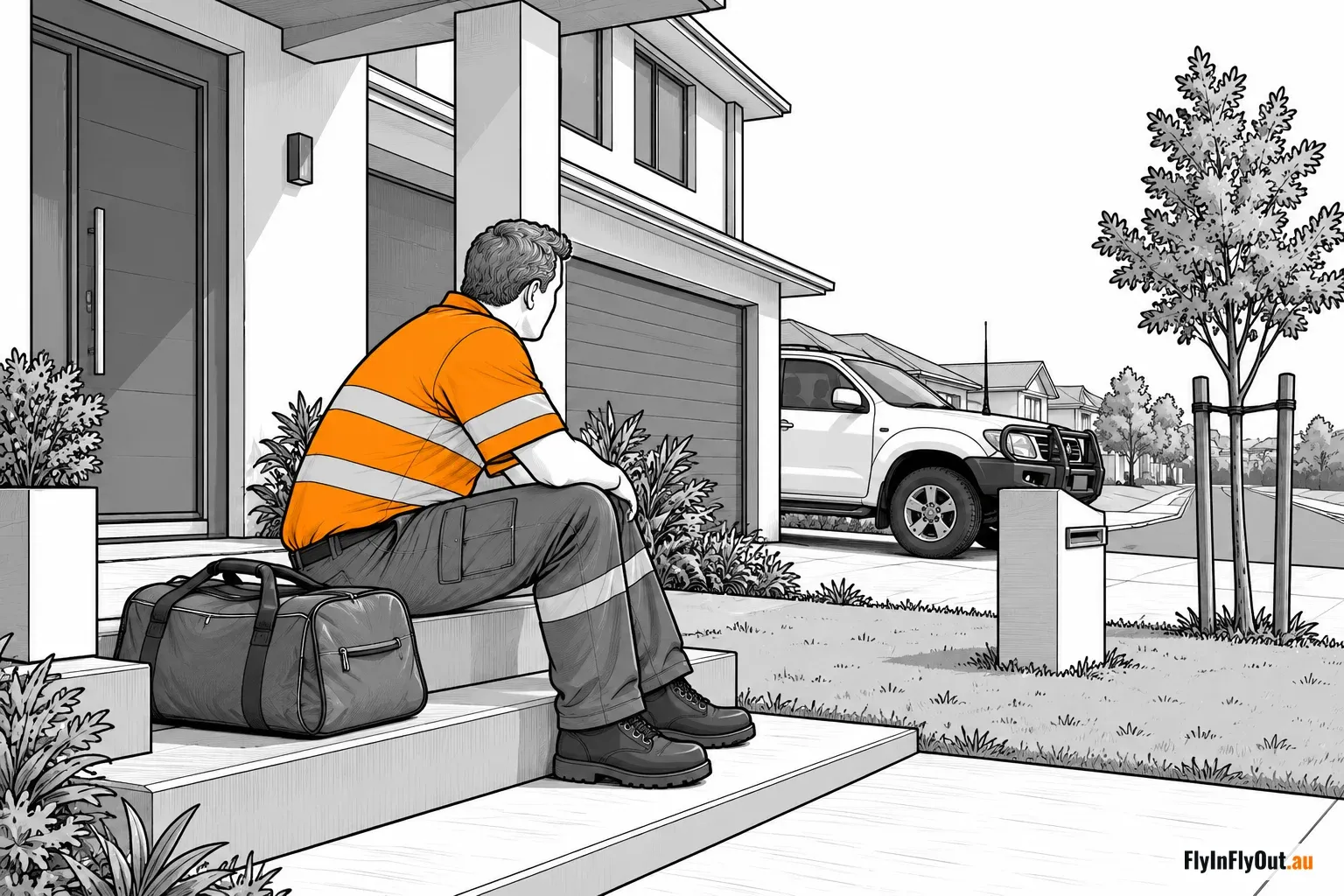
One bloke wrote online about starting FIFO at twenty-six, from a city job, watching the numbers not move. He got a job on a Pilbara mine site and earned more in his first year than he'd ever seen attached to his own name.
The house and the ute
The bloke who started at twenty-six was smart with it, or thought he was. He didn't blow it; he bought a house. It wasn't a mansion, just a proper house somewhere decent, and the bank said the repayments were comfortable on his income. They were, exactly comfortable: there was no margin, but a mining wage makes everything feel as if there is.
In his second year he bought a ute, one he needed, or told himself he needed, with a loan and the insurance on top, and he was still fine. By his third year his pay had gone up with experience, and he had the house, the ute, the furniture and the full setup. His life looked like the one he'd always wanted. It also cost exactly what he earned.
Stuck on a high wage
The Pilbara worker was making more than anyone in his family ever had, and he was as stuck as he'd been in the city. But now the thing keeping him stuck wasn't a low salary. It was a high one.
He wrote that he hated the swings and hated being away, and wanted to come home. He couldn't, because everything he'd built needed the money, and if he took a city job he'd lose the house.
When he wrote it, he was still out there, eight years in.
How do you use FIFO without getting trapped?
Short answer
You use FIFO without getting trapped by working out the real hourly rate and setting a target and a date to stop, before the first swing. Plan for what the money can't fix, then keep living at your old cost for six months to see what the money actually feels like.
One woman posted about her six years, starting at twenty-eight, renting in Perth, doing admin for a construction company and watching the deposit calculator go backwards. She was offered logistics coordination on site, on even time: two weeks on, two weeks off. She did four things differently.
Per hour, not per year
The woman on even time did the maths per hour, not per year. She found that every roster paying more on paper paid less per hour worked. She chose even time knowing she'd earn less per year than someone on two weeks on, one off, because the real rate was better and two weeks at home meant she still had a life to come back to.
She changed nothing for six months. She kept the same rental, with no house and no car. FIFO money landed in an account while her costs stayed exactly the same. After six months she knew two things: how much she could actually save a month, and whether she could stand the work.
A figure, a date and a plan
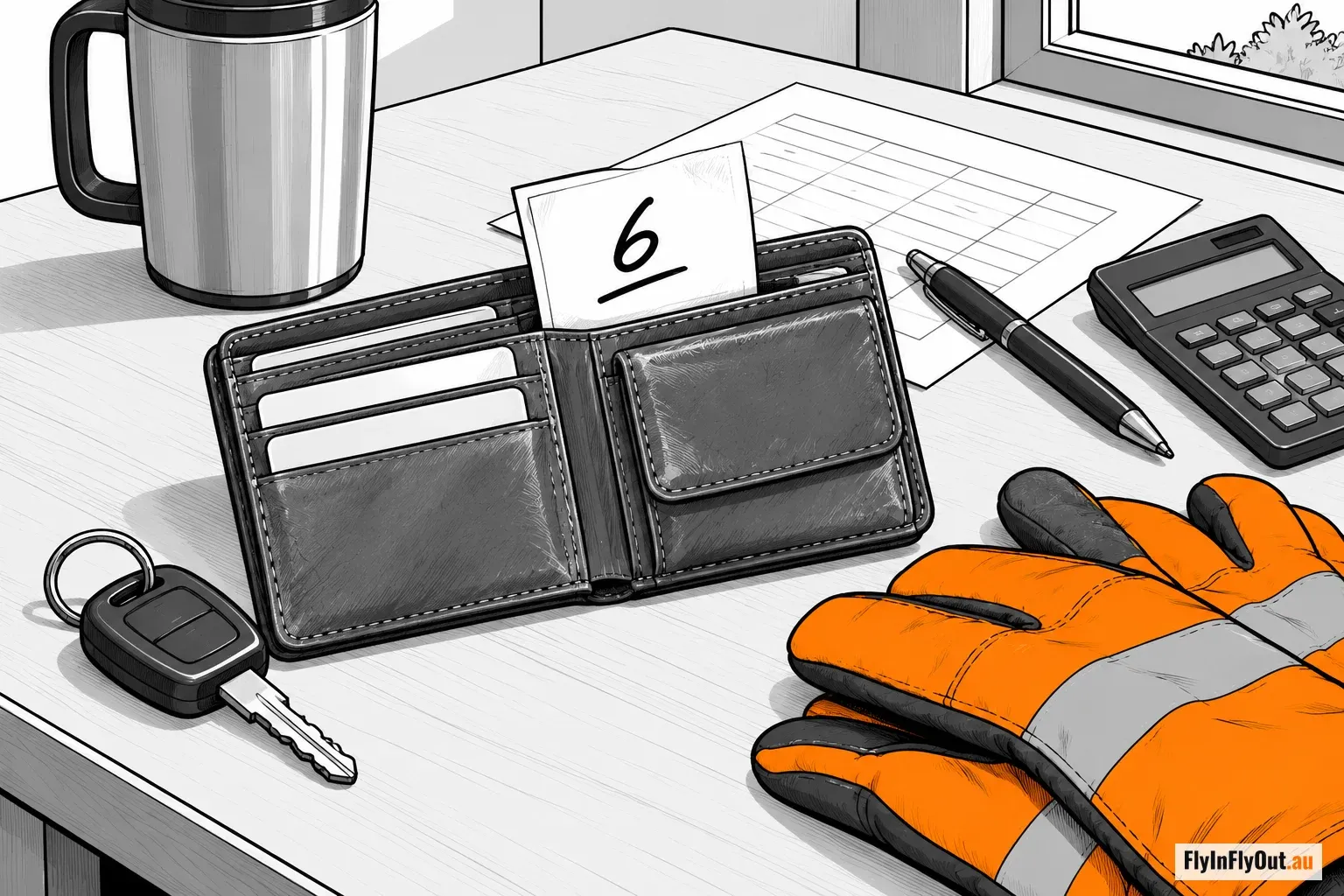
The logistics coordinator set a figure and a date. Her target was savings for a deposit, a buffer and enough on top to feel she'd changed her position rather than just her job, within six years. She wrote the years on a card and put it in her wallet.
She planned for the parts that aren't money. She knew the hours between shifts in a donga (the demountable room you sleep in on site) would be among the hardest parts. So she gave them a job and started reading properly: she read more in her first year than in the previous ten.
She watched the crew too, who make the work bearable, which is exactly why people stay. She wrote that the ones who stay too long aren't the ones who hate it: they're the ones who get comfortable, and comfortable is more dangerous out there than the heat.
Where she ended up
The coordinator bought an apartment in year five, smaller than she could afford, with repayments a city salary could cover, after passing her target. She left in year six, on her date, and wrote that the last drive to the airport wasn't sad or relieved, just finished. When she wrote it, she was back in Perth on a lower salary, in her own place, in her own bed every night, which is a sentence that doesn't mean much until you've spent six years not doing it.
On a 2:1 you get one week off in three and spend the first day of it asleep, which is why even time can be worth its smaller pay.
What is the real hourly rate for FIFO?
Short answer
The real hourly rate for FIFO is the annual salary divided by the hours actually worked on site, and it falls as the roster gets longer. On a 2:1 roster, $110,000 works out at about $38 an hour, while Perth-based electrician ads on SEEK offered $50 to $60 an hour in October 2026. The headline number goes up with compression; the hourly reality goes down.
| Roster | Hours on site a year | Real rate |
|---|---|---|
| Even time (2:2), $120,000 | about 2,190 | about $55 an hour |
| Two on, one off (2:1), $110,000 | about 2,920 | about $38 an hour |
| Three on, one off (3:1), $110,000 | over 3,200 | about $34 an hour |
That's what the compressed rosters are: cheaper labour sold in a bigger package. A tradesperson can earn well in the city too, with overtime and penalty rates, while sleeping at home. For entry-level and unskilled work the comparison goes the other way: city retail and hospitality don't pay a cleaner the $90,000 some camp jobs advertise. To check the rate on an ad you're looking at, try the FIFO pay calculator.
What does FIFO cost you that isn't money?
Short answer
FIFO costs you the dead hours after each shift, the work of fitting back in at home, and a crew that makes one more swing too easy.
The money is the easy part. The money is just maths. The hard part is the swing, and it comes in three pieces that nobody puts on the job ad.
The dead hours
After a twelve-hour shift there's a donga, a mess and a gym, and nowhere else to go. Scrolling your phone and thinking about what you're missing is the default, and the default is what wears people down. The ones who last have something to do with the hours.
The coming home
The people you left built a week that works without you. When you walk in, you're not returning to your life; you're interrupting someone else's. The couples who handle it talk about it before the flight, not after the fight.
The crew
The people on site become your mates, and that's real. It's also what keeps you there. When the work is hard and the distance hurts, the crew makes it bearable, and bearable is how one more swing turns into eight years. The end date gets pushed back so quietly you don't notice it moving.
What has changed in FIFO is the entry-level end: a cleaning or utility role that once felt like easy money now draws plenty of applicants and pays one of the lowest rates on site. It's still worth it as a way in, not as a place to stay.
The people who treat it as a career without meaning to end up still out there, because the life they built needs the wage. Decide which kind you are before the first flight.
Is FIFO worth it for you?
Which reader are you?
| If this sounds like you | FIFO will probably |
|---|---|
| Single, renting, deposit going backwards | Be the fastest way out of that sum you'll find, if you set the figure and the date first. |
| Planning to buy a house in year one, at the top of your new income | Own you. Buy something a city wage can carry, and buy it later. |
| A qualified tradie weighing FIFO against city work with overtime | Pay about the same per hour. Choose on the roster and your bed, not the headline. |
| Partnered, with kids | Work on even time and with the decision made together; grind on a 2:1 made alone. |
| Someone who finds it easy to get comfortable | Hold you there past the exit date you set. Write the date down and tell someone at home, so someone other than you is keeping it. |
FIFO is a vehicle, not a destination. The people who use it well get in, drive where they need to go, and get out. Those who end up trapped forgot they were supposed to be going somewhere.
Confidential support: Lifeline: 13 11 14. MATES in Mining: 1300 642 111. Relationships Australia: 1300 364 277. 1800RESPECT: 1800 737 732.
Ask yourself the hard questions first. Here are six of them. Three minutes. Free.
Is FIFO right for me?