FIFO Jobs for Women
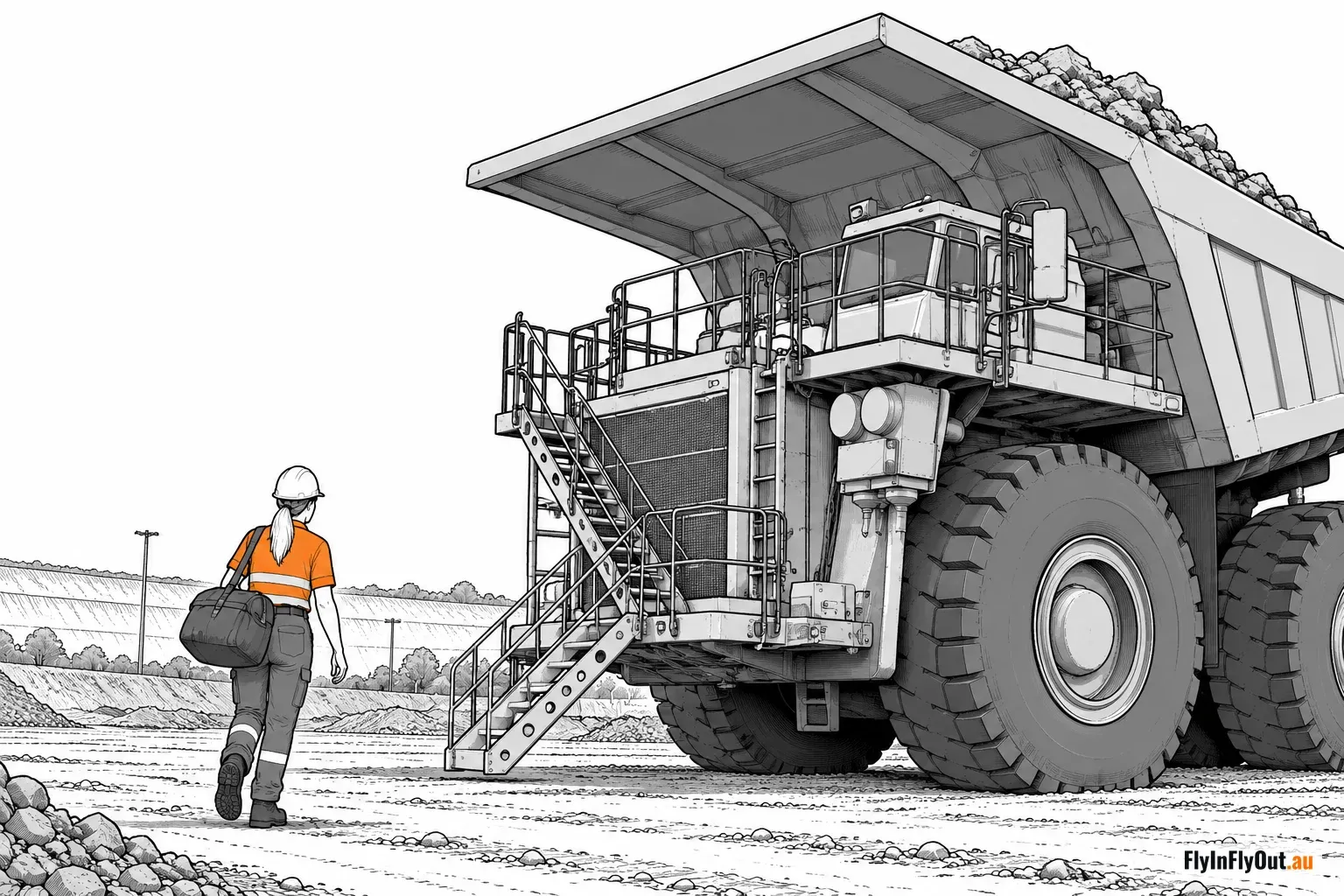
Getting into FIFO as a woman is easier than it used to be. The big miners are recruiting women on purpose, the pathways are real, and the pay is the same as the men's. Staying is harder than the brochures admit.
FIFO jobs for women: Where to start
- No trade, no ticketsStart here
- Want to drive the big machinesStart here
- Have a trade, or want oneStart here
- Nurse, paramedic or medicStart here
- Worried about life on siteStart here
- Want to know the payStart here
Find FIFO jobs for women
It's possible, and it works the way it does for men: tickets first, then the caterers and labour hire agencies. A "women in FIFO" search listed 441 jobs on SEEK (opens in a new tab) in October 2026, 479 on Jora (opens in a new tab) and 200 on Indeed (opens in a new tab), mostly entry roles.
Before you apply, check where each ad's flights leave from, called the point of hire. Getting there is usually up to you.
FIFO jobs for women at a glance
| Possible? | Yes. Every job on site is open to women |
|---|---|
| Which jobs | Camp jobs with no tickets, traineeships on the big machines, trade jobs and site medical |
| Who is open to it | Every employer, with the big miners actively recruiting women |
| The catch | Sites still about four-fifths men, with the culture changing from site to site |
Checked October 2026.
What jobs can women do in FIFO?
Short answer
Women do every FIFO job on a mine site, so female FIFO jobs are the same jobs men do. Four routes in are wide open: camp services, operator traineeships, the trades and site medical.
The tier-one miners (BHP, Rio Tinto, Fortescue) have public targets for female hiring, so a woman's entry-level application has a tailwind it didn't have ten years ago. One warning before the routes. Some resentment about diversity hiring exists on site, and you may meet it. It often fades once you show you can do the work, but you deserve the warning before the attitude, not after.
Camp services
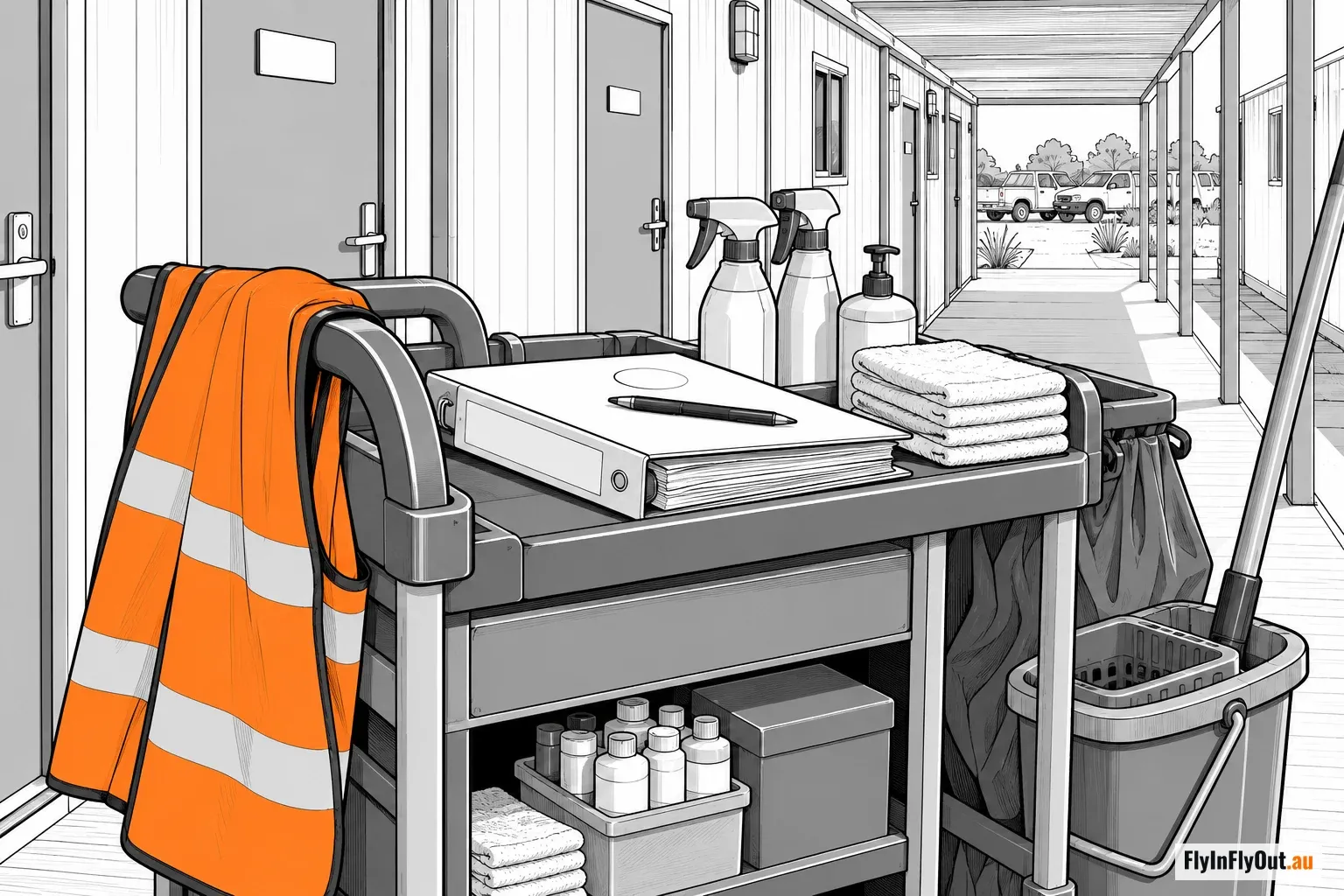
Camp services means cleaning, housekeeping, kitchen work and laundry. You're employed by the catering company that runs the camp, not the mining company. You need no trade and no tickets beyond a manual driver's licence and a police clearance, and the ads say no FIFO experience is required.
The work is physical, and it's one of the lowest-paid jobs on site. One thing worth knowing: these crews have far more women in them than the mining crews do, and for some women that makes the first few months much easier.
Operator traineeships
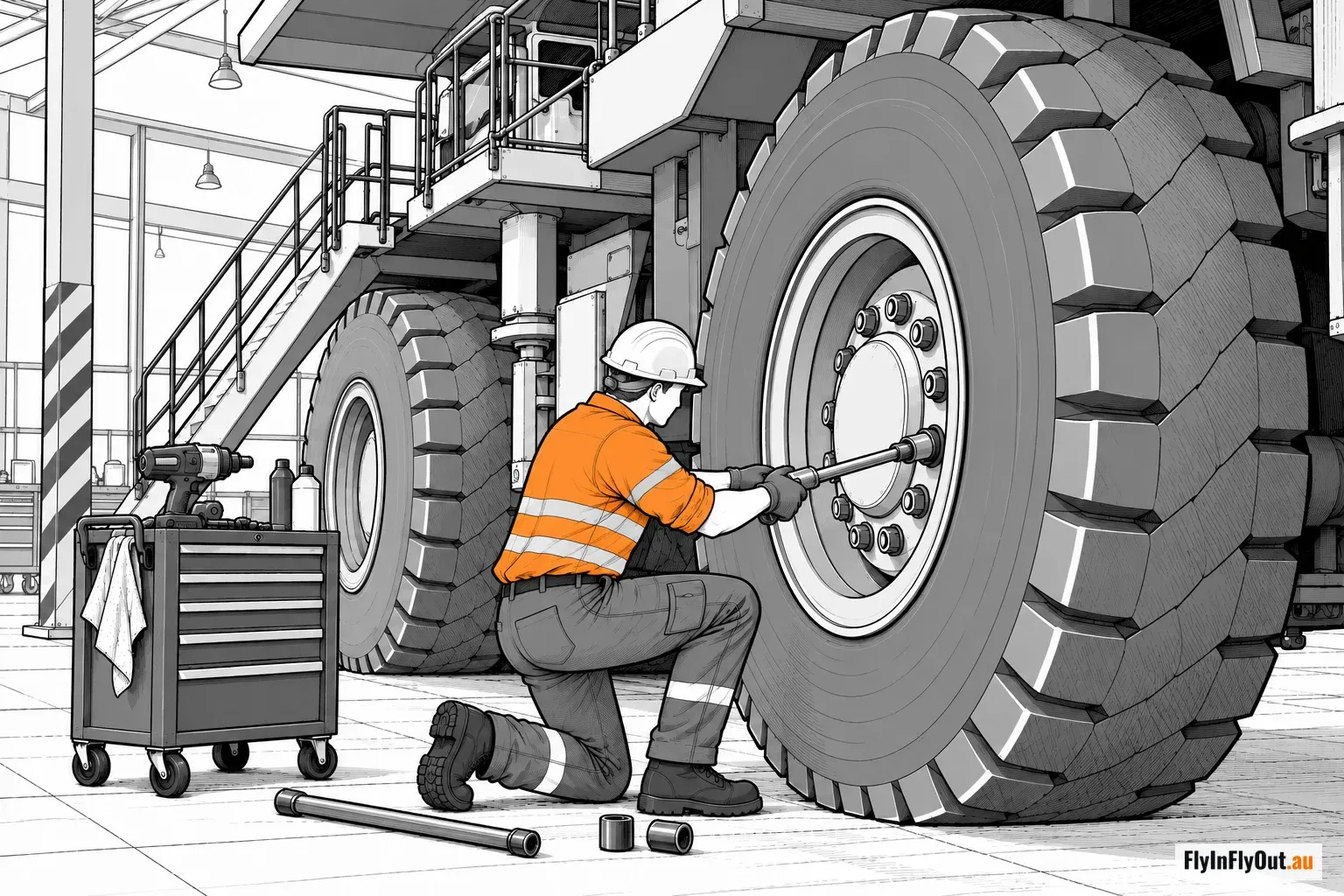
Operator traineeships train you to drive the big machines: haul trucks, excavators, water carts. The mining companies have targets for hiring women, so the traineeships are more open to women now than they have ever been. Training is provided and the money is mid-range, growing with experience. Once you're qualified, you're paid the same rate as the man in the next truck.
The trades
If you have a trade, or are willing to do an apprenticeship, you're in line for top trade pay and the crew's respect. Female electricians, heavy diesel fitters and plumbers are in demand. Women in the trades say the same thing over and over: put in the work, ask for no exceptions, and the crew accepts you. Once you've proved yourself, they'll go a long way to have your back.
Site medical
Every major site has nurses, paramedics or medics, the demand never stops, and it's one of the oldest routes for women into FIFO. The job is different from a hospital: you may be the only clinician for hundreds of kilometres, you handle whatever comes through the door, and the isolation is real. The FIFO nursing page covers the roles and the pay.
How do you get a FIFO job as a woman, step by step?
Short answer
You get a FIFO job as a woman with the licence, police clearance and White Card any first job needs, then applications to the camp companies, agencies and traineeships. Women-only intakes add a door; they don't replace the ordinary ads.
From no experience, in WA
- Get your manual car licence, police check, White Card and first aid sorted (what a first job needs). Every course asks for your USI (Unique Student Identifier), a free number you make online.
- Choose your route: camp services with no tickets, an operator traineeship, a trade, or site medical if you're a nurse or paramedic (the four routes).
- Watch for the women's intakes, such as Rio Tinto's New to Mining, and the caterers' campaigns, and keep applying for the ordinary jobs too (how to get in).
- Register with the agencies and the camp caterers as well as the job boards, with your tickets at the top of your résumé (the résumé).
- Base yourself in Perth for the WA jobs, since that's where most of them fly from (FIFO jobs in Perth).
- Never pay an agency or anyone else to put you forward for a job (the fee rule).
- Once you're offered the job, the employer books the medical and drug test and the inductions. Then pack for the swing, with the extras women on site recommend (the packing list).
- On your first swing, keep a routine, set your boundaries early, and know the reporting line if anyone crosses one (life on site).
In Queensland
In Queensland, the camps and coal mines fly from Brisbane (FIFO jobs in Brisbane), and a coal mine also wants Standard 11, the coal mine induction, and a coal board medical, which the employer pays for.
What is FIFO life actually like for women?
Short answer
FIFO life for women means a workplace still around four-fifths men, on sites whose safety failures led the WA Parliament to investigate in 2022. Since then, reporting has teeth and the culture is shifting, but not everywhere and not fast. The women who do well keep a routine, keep their private life off site, and earn respect through the work.
The ratio swings widely by site, role and company. The culture on a site reflects its ratio, and the ratio reflects decades of an industry built by and for men.
The 2022 inquiry
The Western Australian Parliament held a formal inquiry into sexual harassment in the FIFO industry and published its report, titled "Enough is Enough", in 2022. It is public record. It documented harassment, assault, and a culture that in places discouraged reporting.
It made recommendations the industry has been acting on: new reporting systems, camp security and room design, alcohol limits on some sites, and a shift toward accountability that has started but isn't finished. The inquiry did not find that every site is unsafe. It found that the systems meant to keep people safe had failed in enough places, often enough, that Parliament stepped in.
I've read what women who've worked on site for years write about the culture as it is now.
On earning respect
Do the work, pull your weight, don't expect exceptions. Once you've proved you're solid, the people around you become fiercely protective. One woman wrote that once you prove your worth, the boys will run barefoot through broken glass to defend you from the actual creeps.
On the FIFO mask
Some women change how they present on site: practical clothes, little attention to appearance, a professional distance kept on purpose. That's not styling advice. It's a coping strategy, and research on FIFO workers' mental health has found it carries a real cost over time, especially on long rosters.
It works. It also grinds. Better to know the second part before you start than six months in.
On the wet mess
The camp bar and the common rooms are where a site's social life plays out. The advice is to be selective. Some women find real community there. Others find that a fixed routine, gym, meals, room, sleep, and a deliberate choice about when to socialise gives them the most control.
The rumour mill on site is fast and it lands harder on women. Knowing that isn't paranoia. It's what the women who've been there report.
On boundaries
Veteran women are most direct about boundaries. Relationships and hook-ups on site carry consequences that are not shared equally; the gossip follows women further than men. Their advice is practical, not a moral judgment: set boundaries early, and hold them.
On harassment
The major companies have reporting systems, and since the inquiry the enforcement has bite. If someone crosses a line, and there is a line whatever the crude humour that passes for normal, you're entitled to report it. On most tier-one sites the consequence is a "window seat": sacked and flown home, often that day. A safe workplace is a legal right, not a request.
If something is happening on site and the internal system doesn't feel safe, there are other places to turn. The state mining safety regulator takes complaints. 1800RESPECT (1800 737 732) and Lifeline (13 11 14) are confidential. You don't have to handle it alone or internally.
Is the pay the same for women in FIFO?
Short answer
The pay for a given FIFO job on a given site is the same for a woman as for a man, and the October 2026 ads bear that out. The rate is set by the enterprise agreement or the contract, not by negotiation. The gender pay gap that runs across most of the Australian economy is much narrower in mining for that reason.
A female fitter on the same roster as a male fitter earns the same rate. The agreement fixes the money, not the culture.
Search the boards for "women in FIFO" and you get the ordinary ads with the ordinary pay, none of it gendered. The table has typical ads with pay figures from October 2026.
| Role | Advertised pay | Source |
|---|---|---|
| Camp utility, hourly ad nearest the middle | $39 - $40 an hour | Jora, Evolve Talent, October 2026 |
| Camp utility, salaried ad nearest the middle | $84439 + super | SEEK, Compass Group, October 2026 |
| Cleaner or housekeeper, hourly ad nearest the middle | $40 – $49 per hour | SEEK, WorkPac, October 2026 |
| Cleaner or housekeeper, salaried ad nearest the middle | $76503 + Super | SEEK, Compass Group, October 2026 |
| Driller's offsider, hourly ad nearest the middle | $41 - $45 per hour, + Super + Penalties | SEEK, Aston Advantage, October 2026 |
| Driller's offsider, salaried ad nearest the middle | 130k++ | SEEK, Itch Recruitment, October 2026 |
| Truck or plant operator, hourly ad nearest the middle | $60 – $65 per hour (Depending on experience) | SEEK, Drive Personnel, October 2026 |
Each job's ad nearest the middle figure, or its bottom and top ad with fewer than five, from 63 job ads of 12 October 2026. Only ads that stated a figure are in the table. Most don't.
The rest of the financial case is no different for women: the same hourly maths, and the same reason to go in with a plan. To see what an ad really pays per trip, per year and per hour on shift, try the FIFO pay calculator.
Is FIFO right for you as a woman?
A woman's FIFO story isn't always a hard one.
From camp cleaner to contractor
I read about a woman who got her start on a construction site doing camp cleaning. It was entry level, with minimum tickets, the work most people treat as a stepping stone. She didn't. She cleaned, and while she cleaned, she watched how the contracts worked, who won them and how, where the money went from the miner to the contractor to the worker, and where the margins sat.
When the site moved from construction to production, the cleaning contracts went out to tender. She knew exactly what the contract required, what it cost to deliver, and where the incumbent was leaving money on the table. She set up her own company, tendered against her own employer, and won.
Within a few years the contract had paid for a farm outside Perth and a second business in a regional town, and she no longer needed to do the physical work herself. The crew joked for years that they'd all end up working for her. They weren't entirely joking.
What most women's FIFO looks like
Owning the contract won't be most women's story. Most women in FIFO are doing what the men are doing: earning well, saving toward something, planning the exit. But it shows what happens when someone sees the industry clearly, ignores the assumptions about what's possible for her, and backs herself with a plan.
Four honest questions
- Which of the four routes are you actually on? The advice, the pay and the crew are different for each. Pick before you apply.
- Can you keep a routine on a site where the social life is the wet mess? The ones who last have a plan for their evenings before they arrive.
- Do you know what you'd do if someone crossed the line? Know the reporting system and the outside numbers before you need them, not after.
- What's the money for, and when do you leave? Same question as for everyone. A savings figure and an exit date, written down.
Ready to look?
With your tickets done, the jobs are here.
- Women in FIFO jobs on SEEK (opens in a new tab)
- Women in FIFO jobs on Jora (opens in a new tab)
- Women in FIFO jobs on Indeed (opens in a new tab)
- All job boards, contractors and agencies in one list
Fake ads turn up on real job boards too. An ad that asks you to pay a fee before you start is a warning sign: report it to Scamwatch (opens in a new tab).
Confidential support: Lifeline: 13 11 14. MATES in Mining: 1300 642 111. Relationships Australia: 1300 364 277. 1800RESPECT: 1800 737 732.
The test doesn't care about your gender, only whether the roster, the distance and the sacrifice add up. Six questions. Three minutes. Free.
Is FIFO right for me?