FIFO Offshore Jobs
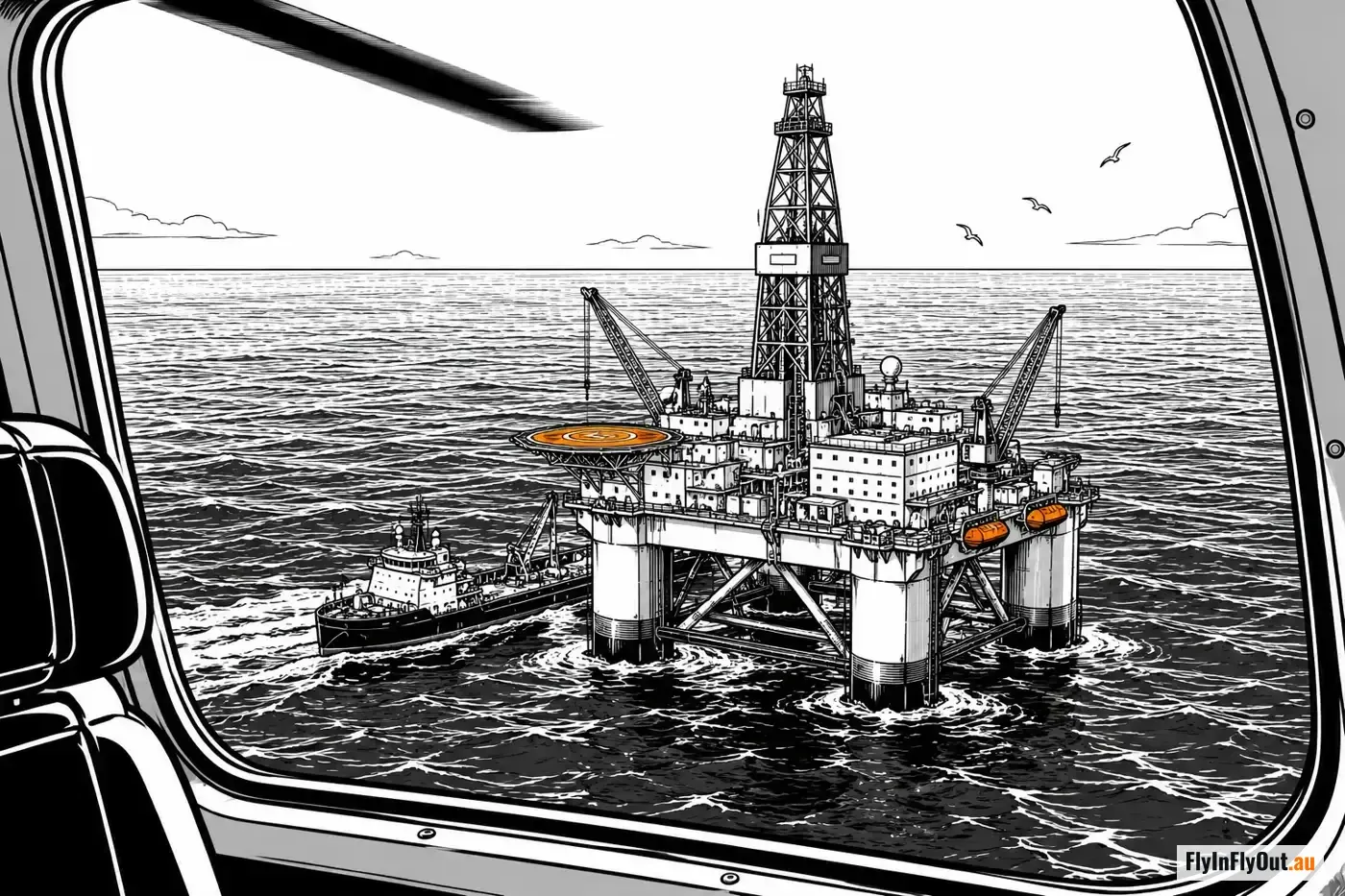
A friend of mine, Jason, worked the rigs through his twenties: the money was excellent, the conditions were hard, he was injured more than once, and he lost a workmate in an accident. At thirty he decided that watching his two sons grow up mattered more than another decade of offshore wages, left, built a good life and never looked back. Offshore oil and gas is among the best paid FIFO there is and it asks the most for it, in weeks at sea, in risk and in the years it takes to get there. Jason got what he wanted from it and knew when to stop, and that is the whole trick. If you are looking at the offshore ads, know what you want from them before you sign, and decide now what would tell you it is time to go.
What FIFO offshore work is
FIFO offshore jobs are the jobs on oil and gas platforms, drilling rigs and vessels off the Australian coast, reached by helicopter or boat. Most of the work is off Western Australia, and most rosters are even time, with as many weeks off as on.
FIFO offshore jobs: Where to start
- No experience, want the first doorStart here
- Have a tradeStart here
- Need the offshore ticketsStart here
- What it paysStart here
- What a rig is likeStart here
- Worried about the riskStart here
Find FIFO offshore jobs
Search offshore jobs on SEEK (opens in a new tab), on Indeed (opens in a new tab) and on Jora (opens in a new tab). Leave "FIFO" out: on 14 October 2026, only four of the first 30 ads in SEEK's FIFO offshore search were offshore jobs. Most offshore ads say "offshore" or "vessel" in the title.
Before you apply, check where each ad's flights leave from, called the point of hire. Getting there is usually up to you.
FIFO offshore jobs at a glance
| Pay | $50 to $120 an hour in the October 2026 offshore ads; one salaried ad $200,000 a year and super |
|---|---|
| Rosters | Mostly even time: 2:2 (two weeks on, two off), 3:3 or 4:4 |
| Flies from | Perth for most, then a helicopter from a coastal town such as Karratha or Broome; Melbourne for Bass Strait |
| You'll need | BOSIET (offshore safety training) and an offshore medical; an MSIC (Maritime Security Identification Card), usually arranged with the job |
| Experience | Nearly always; the catering jobs ask least, and still prefer FIFO or hospitality time |
| Who hires | Caterers (Compass Group's ESS, Sodexo), maintenance contractors such as Monadelphous, labour hire and marine firms; Woodside, Santos, Chevron and INPEX run the fields |
Pay and listings checked October 2026 on SEEK, Indeed and Jora. The pay snapshot starts reading offshore ads in December 2026.
Can you get a FIFO offshore entry level job with no experience?
Short answer
A FIFO offshore entry level job with no experience is rare, because the few beginner jobs go to people with offshore tickets and some site time. The kitchen and cleaning crew, called utilities, is the usual first door.
Two men told on video how they got out there. One, later a roustabout on the deck crew, worked eight months of casual jobs on mine sites and spent the money on his offshore tickets. Then he told human resources (HR) at the caterer he worked for that he was ready to go. The call came as he was about to fly to the mine: an offshore utility job, leaving the next day.
The other started as a floorhand, handling pipe on a small platform, because he had years of rigging and crane work behind him.
The roustabout's advice was to take the first offshore job you're offered, whatever it is, because a swing or two out there is what gets your foot in the door.
The nearest door for a beginner in October 2026 was on land. Ventia was taking names for floorhand jobs on Barrow Island, an island off the Pilbara with an oil field and a gas plant, with experience "advantageous but not essential", a manual licence and an even-time roster. It isn't offshore work, but it is a start in oil and gas.
Fly in fly out offshore oil rig jobs for trades
Trade ads offshore want offshore experience on top of the trade. In October 2026 Monadelphous wanted two years of it for electricians finishing a new gas project out of Broome, with hazardous areas and instrumentation tickets, and another contractor wanted three. Monadelphous's pump technician ad asked for a heavy diesel trade, flange management and oil and gas experience. Some trade jobs are a single swing with no promise of the next.
For riggers and scaffolders, a floorhand who went offshore said there are a lot of rope access jobs out there, and they prefer level two or three. Shutdowns at the onshore gas plants, when a plant stops for maintenance, are one way to get oil and gas work on a resume first, and the electrician and rigging and scaffolding pages have those ads.
How do you get a FIFO offshore job, step by step?
Short answer
You get a FIFO offshore job by working on a mine or in a camp first, then paying for the offshore tickets and medical from that pay. With both done, you put your name down with the rig caterers and labour hire firms, and take the first job going.
From no experience, in WA
- Get a start on land first: a camp job with one of the caterers that also crew the rigs, or a floorhand job on Barrow Island (the doors on land).
- Pay for the offshore medical first, then BOSIET, out of your site wages, before any offshore job is offered (what they cost).
- Base yourself in Perth, where most offshore crews fly from, or in Melbourne for the Bass Strait jobs (where they fly from).
- With the tickets done, tell the caterer you work for that you're ready to go offshore, and add your name to the labour firms' lists (how one roustabout got out there).
- Take whichever rig job comes up first, kitchen or deck, because one swing offshore puts you ahead of everyone who hasn't done one.
- Never pay an agency or anyone else to put you forward for a job (the fee rule).
- Once you're offered the job, the employer usually arranges your MSIC, the security card for ports and rigs, with the medical and drug test.
- On your first swing, expect a twelve-hour shift every day, a cabin shared with strangers, no phone on deck, and a longer swing if the helicopter can't fly (what it's really like).
With a trade
With a trade, add some oil and gas time first, such as a gas plant shutdown on land, then apply to the maintenance contractors that run the offshore trade work (offshore jobs for trades).
How do FIFO offshore jobs work, and who hires?
Short answer
FIFO offshore jobs in Australia are mainly with contractors: caterers for the kitchen and cabins, labour and vessel firms for the deck, and maintenance contractors for the trades. The oil and gas companies run the platforms and employ some crew directly.
Many offshore ads are expressions of interest, or EOIs: the company is collecting names for work coming up, so applying puts you on a list rather than on a flight.
What the ads ask for
Most ads ask for:
- BOSIET with CA-EBS: the offshore safety course, with helicopter escape training in a pool and a breathing set in case the helicopter goes into the sea. ERGT runs it over two days in Perth and Melbourne for about $2,400 (October 2026).
- An offshore medical, to a UK industry standard such as the one from OEUK (Offshore Energies UK). Getting a sick worker off a rig can take half a day of helicopters, one roustabout said, so the crew sent out has to be fit.
- Australian work rights
After the offer, the employer arranges:
- The MSIC, the maritime security card: the application needs a letter from an employer, so it usually comes with the job. The roustabout called it "a bit of a chicken and egg scenario", because some ads, such as a caterer's vessel job in October 2026, want one already.
- A pre-employment medical and a drug and alcohol test
Nice to have, and what each one gets you:
- Mine site or hospitality time: the catering ads rate FIFO, hospitality and utility experience highly
- Working at heights, rigging and dogging tickets: what the deck crew asks for
- Maritime Union of Australia membership for vessel work: the roustabout said that nine times out of ten you'd have to be in it to work on the vessels
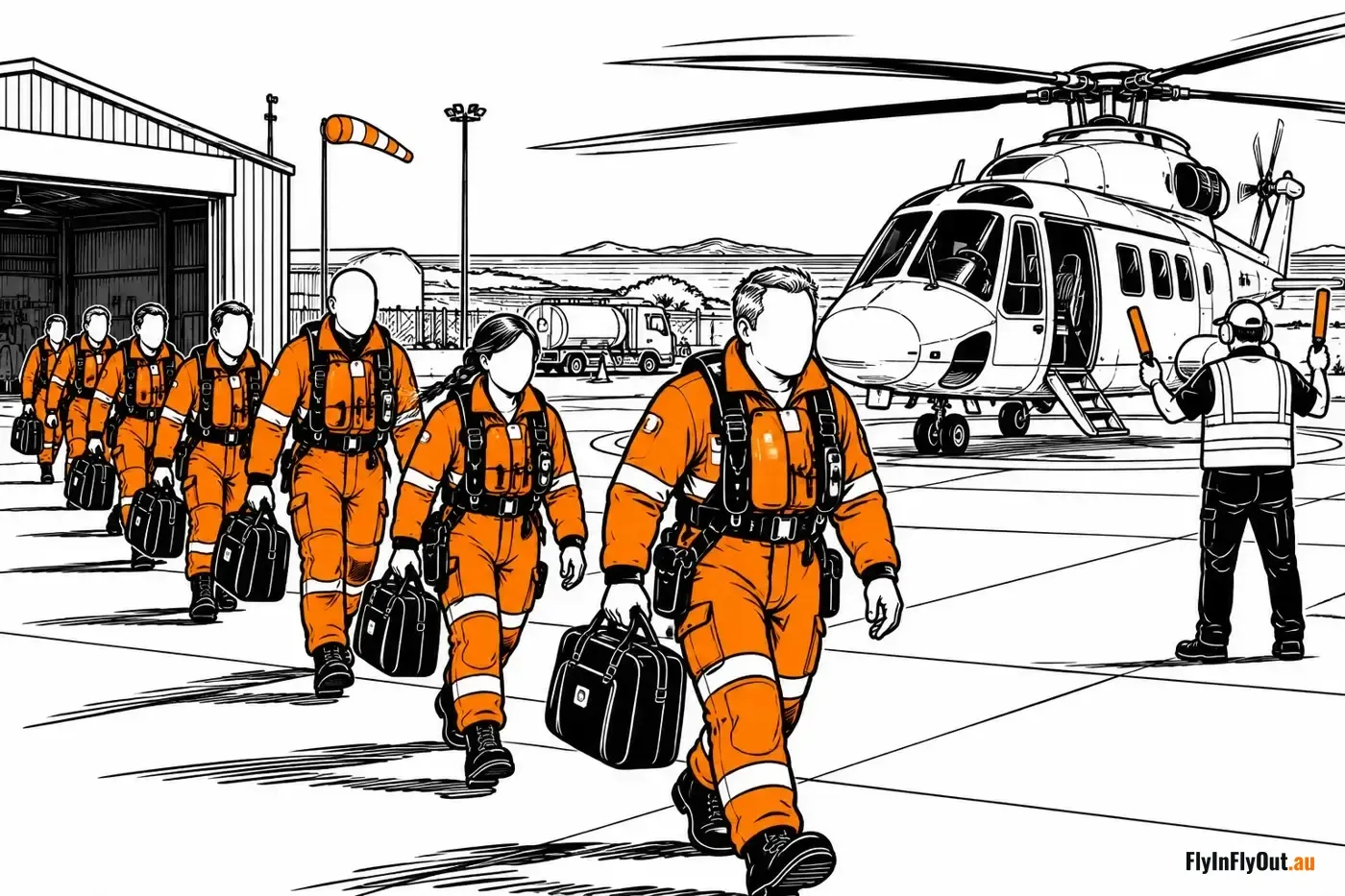
The offshore medical has to come from a doctor on OEUK's register (opens in a new tab), which lists more than a dozen Perth clinics. The clinics' websites showed no prices in October 2026, so ring two or three for a quote. Book it before BOSIET, because ERGT's course needs a current medical. From 1 November 2026, OEUK says it issues no certificate to anyone over 124 kg, weighed in travel clothes.
Where fly in fly out offshore jobs fly from
Most offshore jobs fly from Perth, because the bulk of offshore work is off WA. The flight goes north to Karratha, Broome or another coastal town, and a helicopter takes the crew out from there. One Bass Strait ad gave Melbourne as its point of hire, the airport the job flies you from, and there is work off Darwin too.
How much do FIFO offshore jobs pay?
Short answer
FIFO offshore jobs advertised $50 to $120 an hour in October 2026, in the ads that gave a figure. One salaried ad, for an offshore crane technician, offered $200,000 a year plus super. All were for experienced workers.
| Role | Advertised pay | Source |
|---|---|---|
| Offshore electrical and instrumentation technicians and tube fitters, one four-week swing | $118 – $120 per hour | SEEK, Altrad Services, Oct 2026 |
| Offshore paramedics and registered nurses | $85 – $120 per hour | SEEK, Marlu Resources Group, Oct 2026 |
| Oil and gas drill crews and workshop, onshore and offshore | $50 – $75 per hour | SEEK, Clear Cut Interventions, Oct 2026 |
| Offshore crane technician, salaried, based in Perth | $200,000 + per year + Super | SEEK, Liebherr Australia, Oct 2026 |
Only ads that stated a figure are in the table. Most don't.
Casual work is common offshore, paid for each hour worked, sometimes with an allowance on top: Monadelphous's gas project ad added 25% on all hours. A floorhand said on video that his lowest offshore rate was one he could earn on a mine, and that the difference was the even-time roster. The pay calculator works out a year for any rate and roster, and the salary page has the mine jobs side by side.
What is a FIFO offshore job really like?
Short answer
A FIFO oil rig job in Australia means twelve-hour shifts, a shared cabin and a crew small enough that everyone knows you. Bad weather can ground the helicopter, and then the swing runs on until it flies.
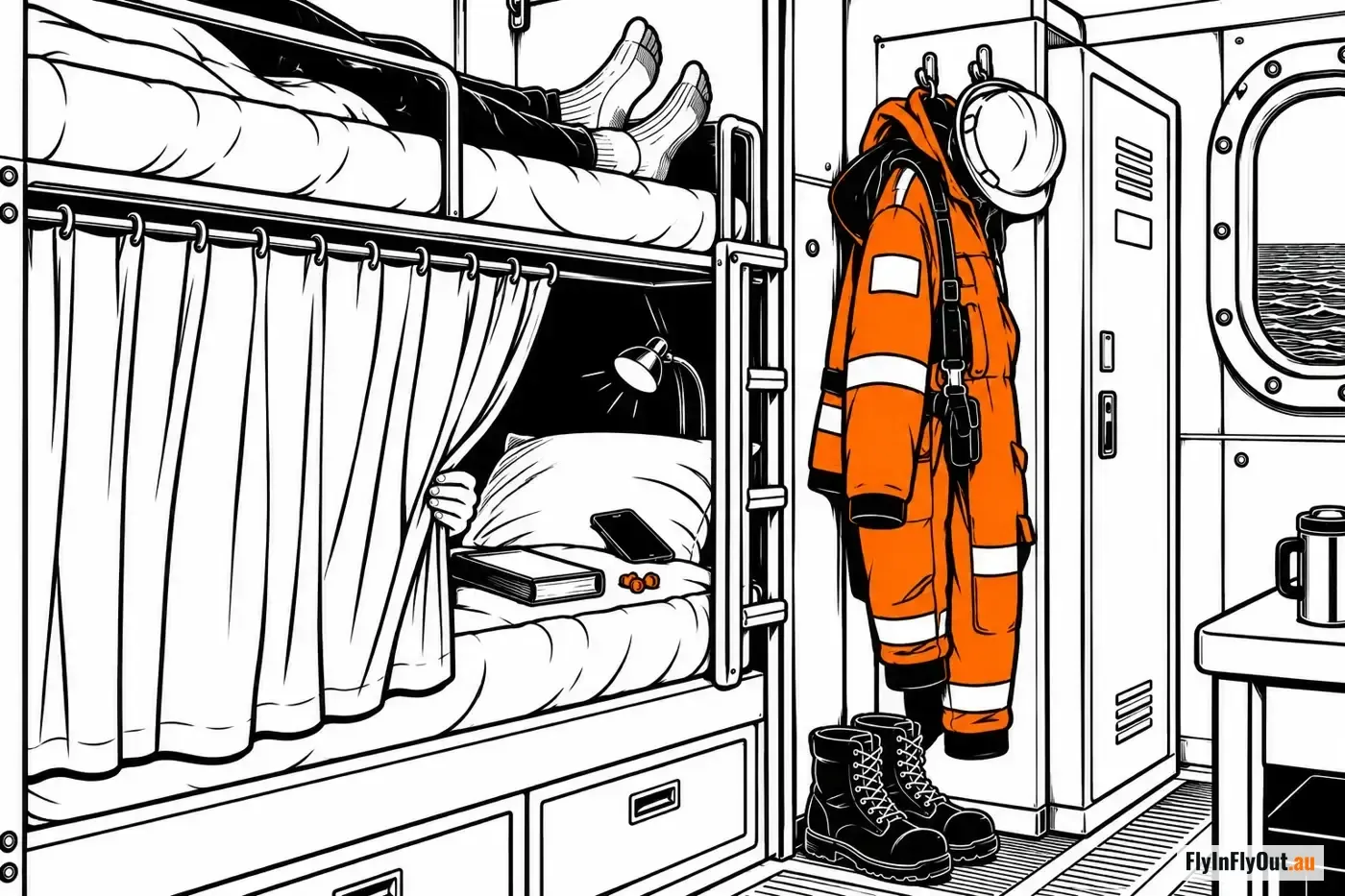
According to a floorhand on video, his platform held about 50 people, six to a bunk room sharing one toilet. Phones weren't allowed on the deck because a spark could set off gas: "those nights get pretty long if you can't access your phone". A roustabout on video shared with two or three others, a curtain across his bunk the only privacy, and rated the food above most FIFO food.
Rigs are less forgiving of beginners than mines. The floorhand said a green worker, someone new, gets chopped straight away offshore, where a mine carries plenty of them. The roustabout said being friendly counts for a lot out there, because you live and work in tight quarters with the same crew.
The risk, and how long people last
Neither man on video stayed. The floorhand went back to cranes on the mines because that life suited him better, and the roustabout hasn't been back since 2022: he has a young son now. He called offshore "not something I think you'd want to do forever", but a good way to save for something else. If a swing gets dark out there, Lifeline is 13 11 14.
Where does a FIFO offshore job lead?
Short answer
A FIFO offshore job leads from the kitchen to the deck crew, then to the crane or the drill floor. Each step takes more tickets and someone on the rig to put your name forward.
A roustabout who told his story on video swapped the kitchen for the deck within weeks. He asked the deck crew what it would take, got the high risk tickets they named, and the rig's manager put his name forward to a labour firm. The deck job paid about the same as the kitchen at first and was a lot harder, but he called it "a big opener". He moved between offshore and mine sites after that, depending on where the work was.
Is a FIFO offshore job right for you?
Three honest questions
- Can you pay for the BOSIET with no job offer? One roustabout paid for his before any offer came. If losing that money would hurt, wait until an employer shows interest.
- Can you live in a shared cabin for three weeks? The rig is small and so is the room. If your own space is what keeps you sane, a mine camp gives you a door; a rig gives you a curtain.
- What is your reason to stop? My friend Jason's was his two sons. Decide yours before the first swing, because the money makes the question harder to ask later.
Ready to look?
If you still want in, put your site time at the top of your resume and apply to the companies directly as well as through the boards.
- Offshore jobs on SEEK (opens in a new tab)
- Offshore jobs on Indeed (opens in a new tab)
- Offshore jobs on Jora (opens in a new tab)
- All job boards, contractors and agencies in one list
Fake ads turn up on real job boards too. An ad that asks you to pay a fee before you start is a warning sign: report it to Scamwatch (opens in a new tab).
Ready for the helicopter? The other question is whether the life fits. Six questions, three minutes, free.
Is FIFO right for me?