What Does Fly In Fly Out Mean?
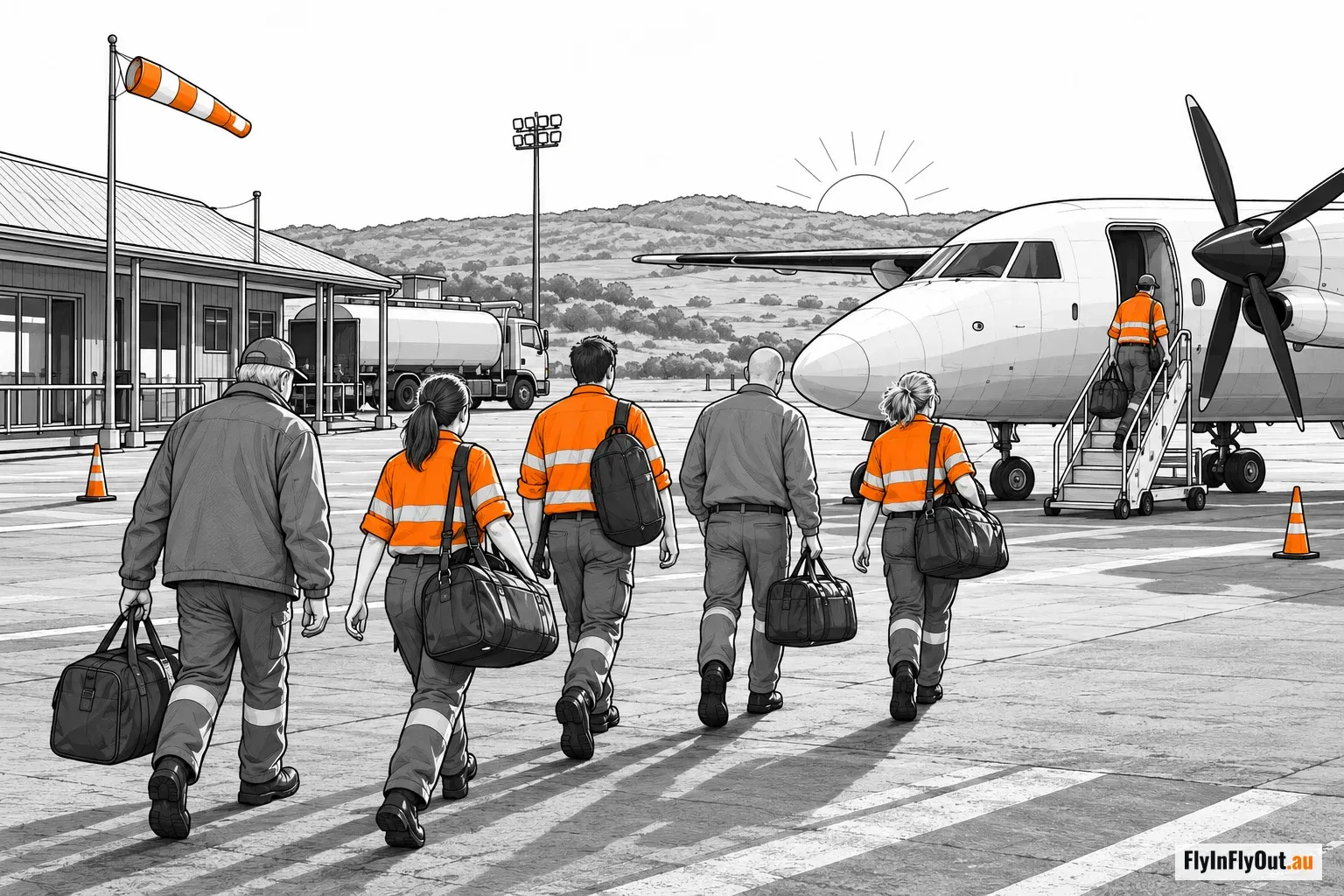
FIFO stands for fly in, fly out. You fly from a city to a remote work site, live there for a set number of days, then fly home for a set number of days off. The company pays for the flights, the room and the food; you provide the labour. The pay is well above the same job in the city, and the life is harder. That's the trade.
How does FIFO actually work?
Short answer
FIFO stands for fly in fly out, which means a worker in Australia flies to a job for a fixed block of days, called a swing, then flies home. On site you sleep in a company camp, eat in a company dining hall and work twelve-hour shifts every day of the swing. At home you have no work at all, and the pattern repeats all year.
In accounting and software, FIFO is something else: first in, first out, a way of valuing stock or ordering a queue. In mining, FIFO always means fly in, fly out.
A good way to understand FIFO is a single fortnight in it, on the roster people chase: two weeks on, two weeks off.
Flying in
Monday morning, early, you're at the airport. It's not the main terminal but a smaller gate, sometimes a charter terminal, sometimes a regional airline desk. The flight might be two hours or four. You land at an airstrip that might generously be called an airport, a bus meets you, and the bus takes you to camp.
Camp and the donga
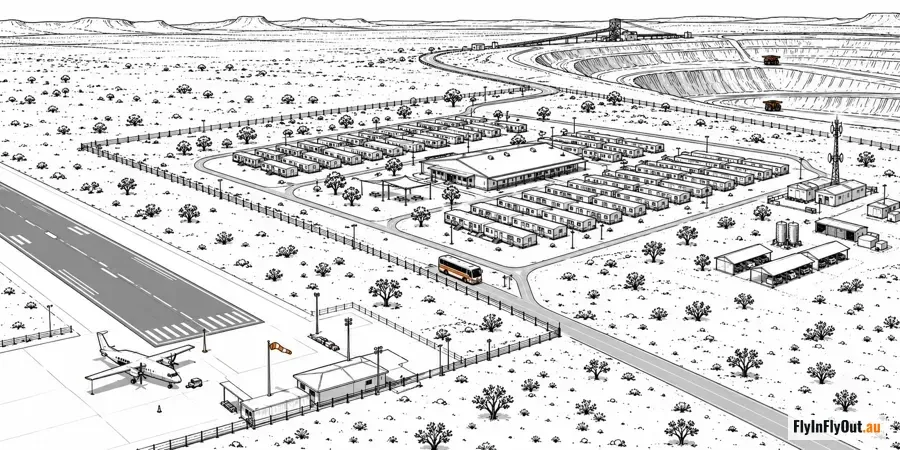
Camp is where you live. Your room is called a donga, a small self-contained unit about the size of a shipping container. You get a bed, a small bathroom, a bar fridge, air conditioning that works most of the time, and a door you can close. That's your private space for fourteen days.
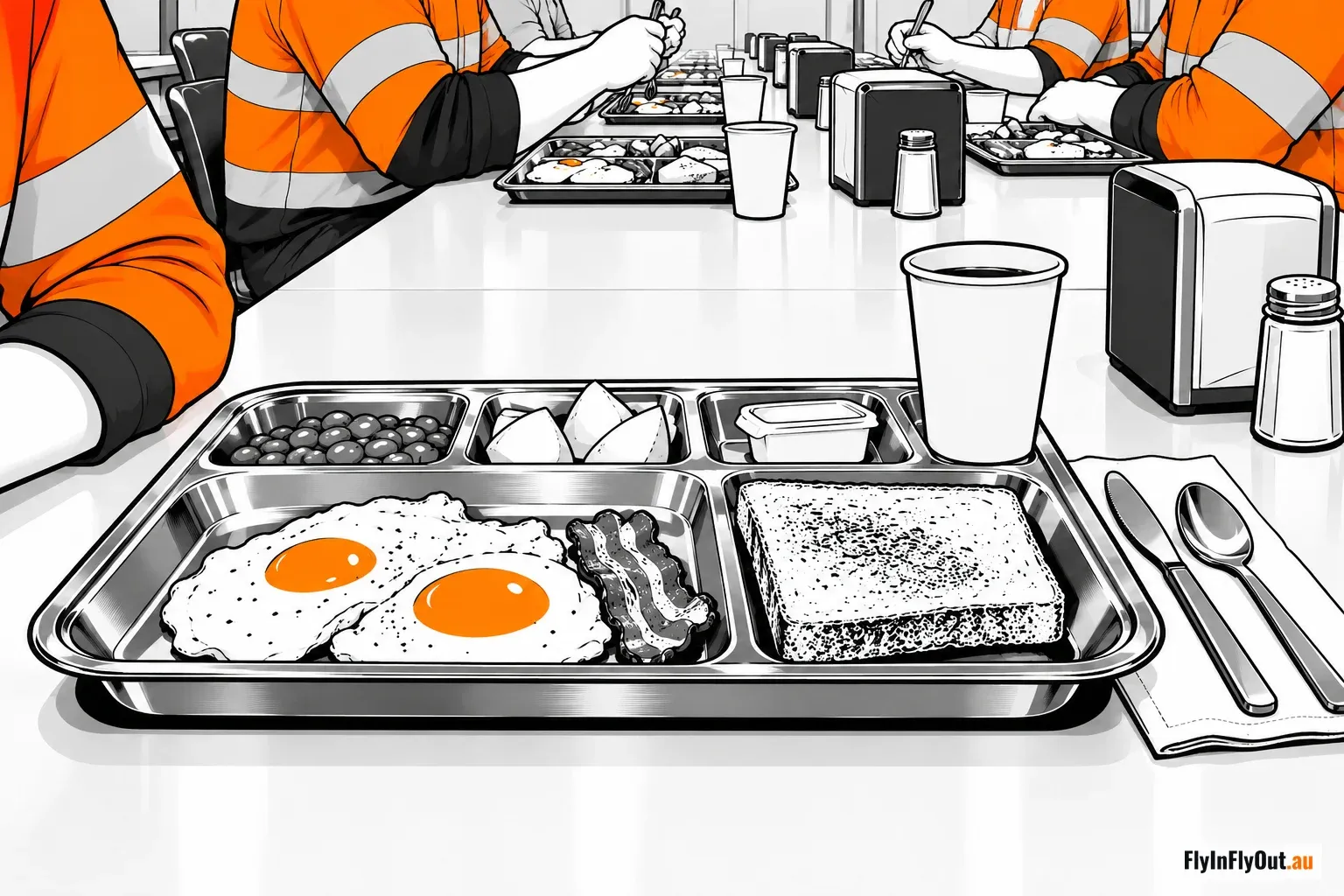
Everything else is shared. Meals are in the mess, the dining hall, at set times, cooked in bulk and eaten with the same hundred or two hundred people every day.
Some camps feed you well and some don't. You don't choose the menu. You eat what's there.
The shifts
Twelve-hour shifts are standard, day shift or night shift, and you may not get a choice. On days you're up before dawn and done by sunset. On nights your body clock inverts and stays inverted for two weeks.
What you do depends on the job: operating machinery, fixing equipment, driving trucks, cleaning, cooking. The hours don't depend on the job. Most of the site works the same shift length, because the site runs on one rhythm and the rhythm doesn't flex.
Twelve hours of work, plus the travel to and from the actual work area, plus meals, leaves two or three hours of real downtime a day. You spend it in the donga: reading, watching something on your phone, calling home if the reception holds, trying to sleep. Sleep is harder than it should be when your body is running on adrenaline and dust and the same four walls every night. You do that for fourteen days, then the bus, the airstrip, the flight, and you're home.
Two weeks off
Two weeks off means your own bed, your own food, your own life. But your life kept going while you were away, and the people in it built a routine that didn't include you, so slotting back in is its own adjustment. You have two weeks to be a partner, a parent, a friend, a person, and then the airport again. That's FIFO, once the acronym becomes a calendar.
Why does the FIFO roster matter so much?
Short answer
The roster decides how much of your year is on site, how much is at home, and what the salary is really worth per hour. Even time, two weeks on and two off, is one of the most liveable rosters and one of the hardest to get. Two on one off, three on one off and four on one off pay more per year and less per hour, with less of a life to come home to.
The same $110,000 that is about $50 an hour on even time is about $38 an hour on two weeks on, one off. If two roles look the same on salary, check the roster first: the FIFO pay calculator works out the hourly rate for any roster.
Who pays for FIFO flights?
The employer pays for FIFO flights between the point of hire and the site, and the bus from the airstrip to camp. The point of hire is the airport named in your contract, usually Perth for WA sites and Brisbane for Queensland, and the company covers nothing before it. Getting yourself to that airport, and home from it, is your cost and your unpaid time. That's why where you live matters so much for FIFO, and the Perth and Brisbane pages cover living near each airport.
Why do people do FIFO?
Short answer
People do FIFO for the money, and anyone who tells you otherwise is selling something. The gap between a city wage and a FIFO wage is, for a lot of people, the gap between staying stuck and changing their position. On site, the living costs are close to zero.
A qualified tradesperson usually earns a good deal more on a mine site than in the city, depending on the commodity, the roster and the role. While they're on site, flights, room and food are paid, so for someone disciplined the savings rate is dramatic. That's the upside, and it's arithmetic, not hype. The downside is everything else, and two people show both sides.
What does FIFO life do to people?
Short answer
FIFO life can clear debts fast and pay for a house, or it can lock a worker into a lifestyle that needs the pay. The roster is the same either way; what the money is for decides which.
The one who used it right
I read about one guy who started at thirty, with no savings, a car loan, credit card debt, and a decent Perth job that was never going to close the gap. He looked at the numbers and made the call. He spent ten years in FIFO, starting in camp services and moving into operations.
He lived lean on site, which is easy because there is nothing to spend money on in a donga. He lived lean at home too, which is harder because home is where the temptations are and the money lands in your account every fortnight.
Debt cleared, house bought, out on time
The guy with the car loan cleared the debt. He bought a house. He built a buffer.
Then, on a date he had set years earlier, he pulled the pin and went back to a city job on lower pay, to his own bed every night in a house that was his. He used FIFO the way it works best: as a vehicle. He drove it where he needed to go, and he got out.
The one who didn't
Someone who grew up with another man wrote about him online. He has done more than twenty years of swings, and they described him as a broken man in many ways, which is not something anyone says lightly.
The money was always good, top tier, but he was always away, and the guilt of always being away produced its own kind of spending. His partner and his daughter filled the gap with the expensive things that feel like compensation for an absent person. The lifestyle crept upward to match the income, and then past it, and because the lifestyle now required the income, he could not leave.
He missed his daughter growing up. When they wrote it, he was still on site, carrying real debt after two decades of earning more than most people ever will. The industry has its own phrase for this, golden handcuffs, and the fact that it has a phrase tells you how common the pattern is.
What made the difference
The difference between the man who got out and the man still on site isn't brains or willpower. The first had a savings figure, an exit date and a plan. The second had the money and no plan for it. That gap is easier to close before the first flight than after it.
Is FIFO right for you?
Short answer
Whether FIFO is right for you depends on four things no job ad mentions: isolation, absence, money and the heat. They are how you handle isolation, how your relationships handle absence, and how you handle money when it's bigger than anything you've earned. The fourth is whether your body can do fourteen twelve-hour days in heat that stops most people walking to the letterbox.
Four honest questions
- How do you handle being alone? Being alone for a weekend is easy. Try a few hours a night in one room, for fourteen nights, with the same people at every meal.
- How do the people at home handle you being gone? They'll build a week without you. The question is whether they, and you, can live with that.
- What happens when the money is bigger than you've ever had? Plenty of people earn well on site. The ones who come out ahead had a plan for it before it arrived.
- Can your body do the shift? The shift is twelve hours, in the heat, fourteen days straight, then again in two weeks. The question isn't whether you could. Have you done anything close?
Confidential support: Lifeline: 13 11 14. MATES in Mining: 1300 642 111. Relationships Australia: 1300 364 277. 1800RESPECT: 1800 737 732.
Now you know what FIFO is. Whether it's right for you is a different question, and it depends on things that have nothing to do with the job ad. Six questions. Three minutes. Free.
Is FIFO right for me?