FIFO Mental Health
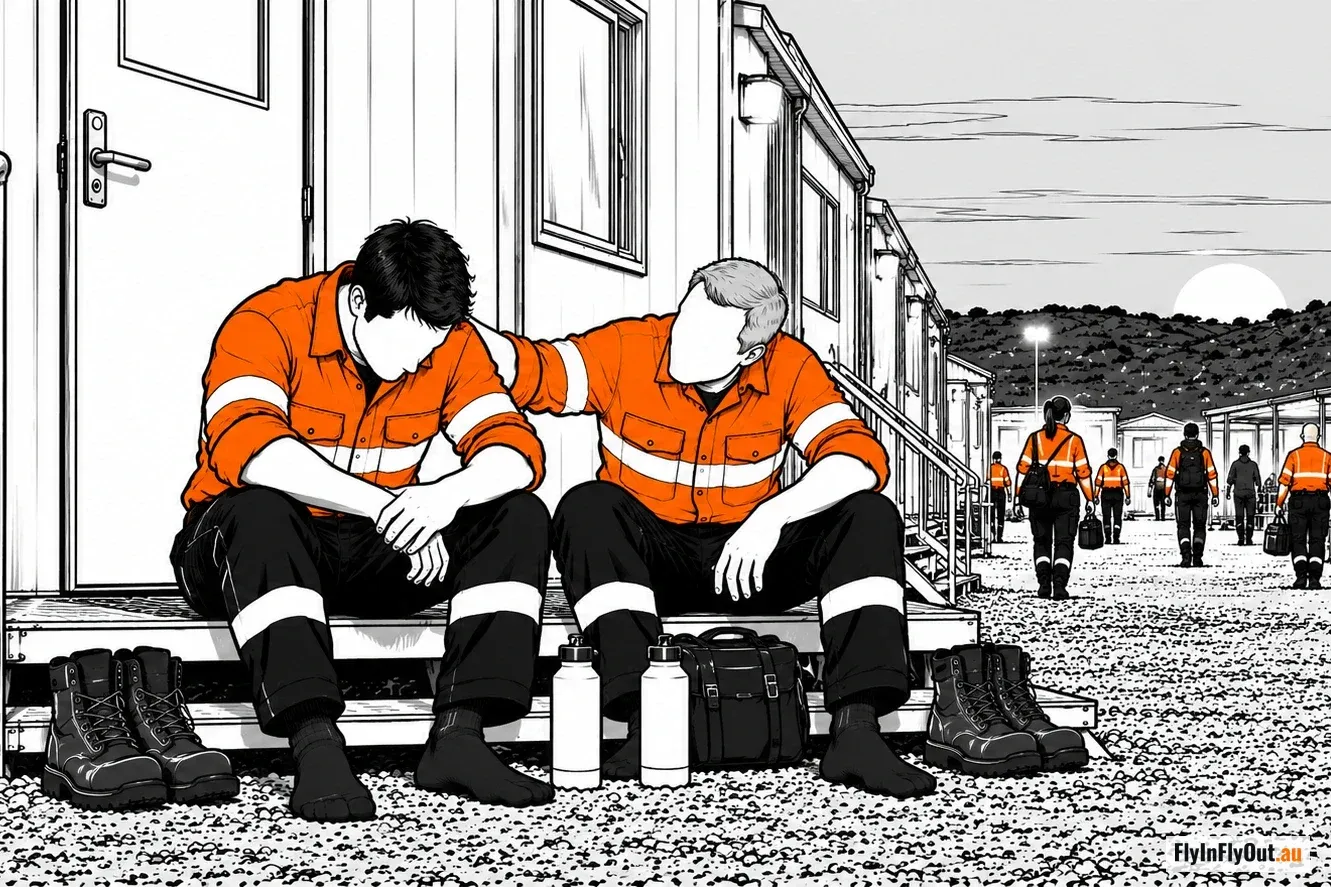
Ask a room full of FIFO workers how they're going, and more of them will be struggling than in a room of workers who go home every night. A study commissioned by the WA government measured it, and what went with it: the roster, the room, loneliness, and whether a site makes it safe to say you're not coping. It also found what goes with doing better, and much of that comes down to how a site is run. If you're on site and reading this at a bad hour, ring Lifeline on 13 11 14 first; the rest can wait.
What FIFO mental health means
FIFO mental health is how fly in fly out work affects the mental health of the people who do it and of the families they leave at home. The roster, camp life, loneliness and how a site treats mental health can all make it better or worse.
FIFO mental health: Where to start
- On site now, not copingStart here
- Worried about a mate on siteStart here
- Partner at homeStart here
- Want the statisticsStart here
- Thinking about starting FIFOStart here
- Thinking about leavingStart here
Where to get help now
Lifeline is 13 11 14, any hour. MATES in Mining, for mine workers, is 1300 642 111, and Beyond Blue is 1300 22 4636. If someone is in danger right now, call 000 and the site's emergency response team. The EAP, your employee assistance program, gives free, confidential counselling, usually through an outside company; ask human resources (HR) or the medic for the number.
FIFO mental health at a glance
| Distress | FIFO workers 33%, other WA workers 17%, Australian men 10% (high to very high distress) |
|---|---|
| Partners | FIFO partners 33%, more than double the rate for Australian women (14%) |
| Rosters | Even time, 8:6 and 5:2 did better than 2:1, 3:1 and 4:1; night shift worse than days on most measures |
| The camp | A permanent room, internet access and social activities were linked to better mental health; the gym and pool table mostly made no difference |
| Culture | Stigma about mental health dragged every score down, and FIFO workers were bullied more often |
Figures from the 2018 WA study of 3,108 FIFO workers, checked October 2026.
What are the FIFO mental health statistics?
Short answer
The main FIFO mental health statistics come from a 2018 WA study, which found 33% of FIFO workers in high or very high distress. That compares with 17% of workers in other WA jobs and 10% of Australian men, and FIFO partners were at 33% too.
FIFO workers mental health statistics: the 2018 study
The FIFO mental health figures come from Impact of FIFO work arrangements on the mental health and wellbeing of FIFO workers (opens in a new tab), a 2018 study by Curtin University researchers for WA's Mental Health Commission. It surveyed 3,108 FIFO workers, 373 partners and 487 former FIFO workers, and compared the workers with 326 people in other jobs. Distress was measured with the K10, a standard ten-question checklist covering feelings such as anxiety and depression.
The comparison group was older, better educated and more often in management. Allowing for that, FIFO workers' distress was still higher, and so was their burnout.
What is known about FIFO and suicide
The 2015 WA parliamentary inquiry began after media reports in mid-2014 that nine FIFO workers had taken their own lives in 12 months. The committee couldn't identify the nine cases, and found no reliable figure for FIFO suicide rates. It warned against concluding that the rate was no higher than in the wider community.
The 2018 study found FIFO workers a little worse off than the comparison group on feeling they didn't belong and on suicidal intent. The gap came mostly from education and job mix: FIFO workers had less formal education and were more often operators or tradespeople, both linked to higher risk. Rosters with more days on than off went with higher suicidal intent, and so did loneliness.
A 2026 University of WA study (opens in a new tab) of WA construction workers put loneliness first among the risk factors for suicidal thoughts, and named FIFO and drive-in drive-out workers among the groups most at risk. If any of this is close to home, Lifeline answers any hour on 13 11 14.
Why does FIFO affect mental health?
Short answer
FIFO affects mental health through isolation and what the roster takes away: sleep, time to recover and the people you talk to. A 2018 study for WA's Mental Health Commission tied poorer mental health for FIFO workers to challenges a site can change: loneliness, long rosters, night shift, stigma and job insecurity.
Rosters and sleep
Workers on even time, 8:6 (eight days on, six off) or 5:2 (five on, two off) did significantly better on every measure than workers on longer rosters. Those were 2:1 (two weeks on, one off), 3:1 and 4:1 (three or four weeks on, then one off), which leave less time to recover. Interviewees said R&R had to be long enough to recover and switch off, and that long trips home ate into short breaks.
Sleep was worse than in the comparison group, and night shift did worse than day shift on six of the eight measures. Interviewees were especially tired in the move from work to home, and the trip back to site was their low point. The rosters page has what each roster gives back.
What the FIFO study found in the mining camps
Loneliness, on site and at home, went with poorer mental health on every measure. Some workers found camp life lonely, especially where the only place to meet people was the wet mess; "it's actually very isolationist," one interviewee said. Barbecues and social sport went with better mental health, but gyms and pool tables, for the most part, made no difference.
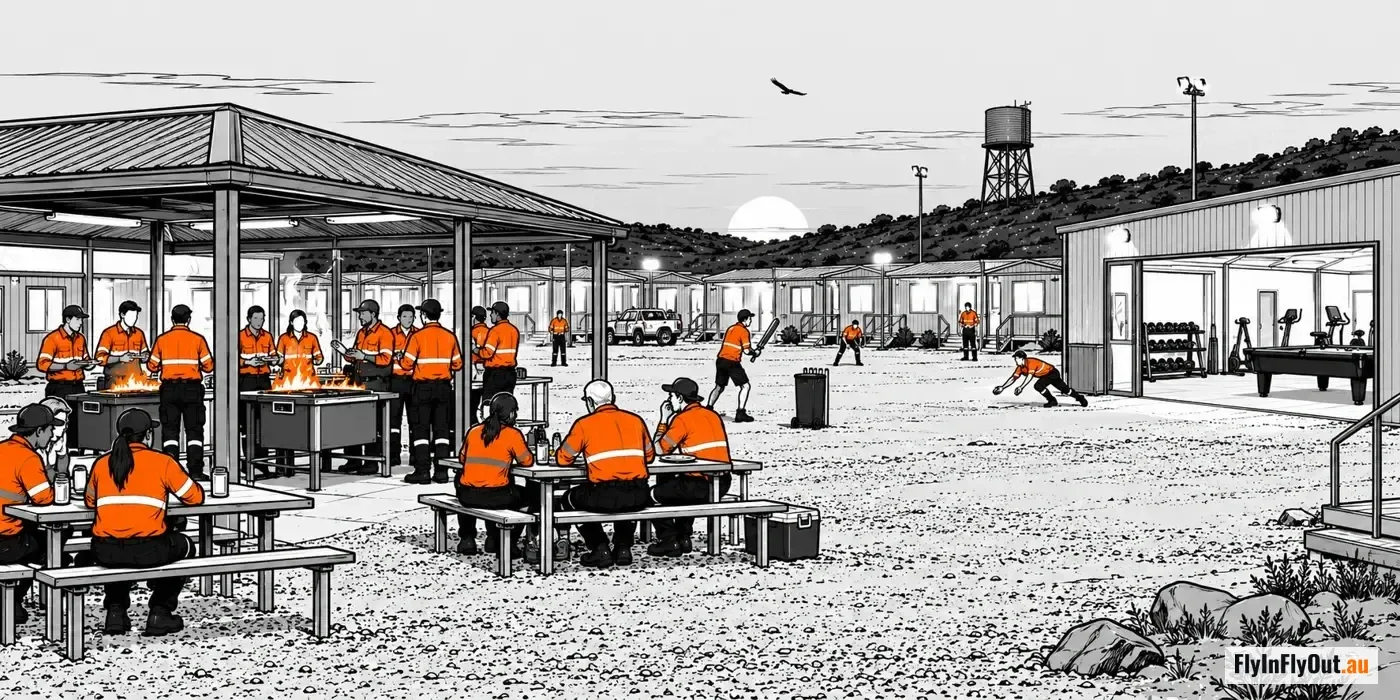
Workers with a permanent room did better than those on motelling, a different room each swing. Internet access went with better results on every measure, and a landline on most. Some interviewees said poor food, patchy internet and many rules made camp feel institutional; one called it "a bit of a prison environment". The camps page has what to expect.
Stigma, bullying and job security
On sites where a mental health problem was something to hide, workers scored worse on every measure. FIFO workers were also bullied, and saw bullying, more often than the non-FIFO workers, mostly by supervisors and workmates.
Most workers and partners interviewed said money was why they took on FIFO, and for many it was the reason to stay. Job insecurity, the threat of the next redundancy, went with worse mental health on its own, and interviewees said it hit harder when money was already tight. Contractors did worse than the mine's own staff on nearly every measure; by job, camp, catering and logistics staff did worst and managers best. The study pointed to contractors' job insecurity.
What does FIFO do to a partner's mental health?
Short answer
FIFO partners' mental health was as bad as the workers' in a 2018 study of FIFO workers and partners, and worse when the worker felt torn between work and home. Only one partner in ten had been given an induction before the FIFO job started.
Partners interviewed for the study described being a "de-facto single parent" while the worker was away, lonely and overloaded at times. They also described growing more independent and resourceful. The low point for partners, as for workers, was the worker leaving for site and the first days of the swing.
Partners who had an induction scored better on self-acceptance and growth, though not on distress, and the study recommended inductions that prepare the whole family. The couples and family page has the practical side.
What are the signs of FIFO depression, and what helps?
Short answer
The signs of FIFO depression are the usual ones, showing up around the roster: drinking more on R&R, going quiet on calls home, losing interest in things. A GP (a family doctor) or the EAP is a good place to start.
What to watch for, in yourself or a mate
The signs of depression that Beyond Blue lists (opens in a new tab) often look like this on a roster:
- Drinking more: on your days off, or at the wet mess most nights it's open
- Going quiet: shorter calls home, skipping the mess, staying in the room
- Losing interest: in the things you used to enjoy, on site or at home
- Sleep problems: sleep that doesn't come right on R&R, and feeling tired all the time
- A short fuse: angry or frustrated over small things
If a mate says they're not coping, take it as real. A Mental Health First Aid trainer told, in a video, of a crew who took a worker's talk of trouble at home as an excuse after he was caught on his phone. The trainer's advice was to treat it as a mental health issue anyway: ask questions and find out what help the person wants.
What helps
What helps, in workers' own words and in WA's 2018 study of FIFO mental health, is getting support early and keeping some habits on site: exercise, proper meals and a goal beyond the next swing.
A FIFO worker from Townsville in his fifties said in a video that burnout crept up on him. He was drinking hard every weekend at home and having a few beers after work on site, with no exercise and poor food, until he didn't want to get out of bed. He turned it around with the gym, proper meals and learning something new. His advice for anyone that far down was to see a doctor or a psychologist.
In the study's numbers, workers who sought support did better on most measures, and those who gave up did worse on every one. Interviewees added their own habits: setting goals, reframing bad thoughts, having something to look forward to, and reminding themselves why they were doing FIFO.
Who to call, and why people don't
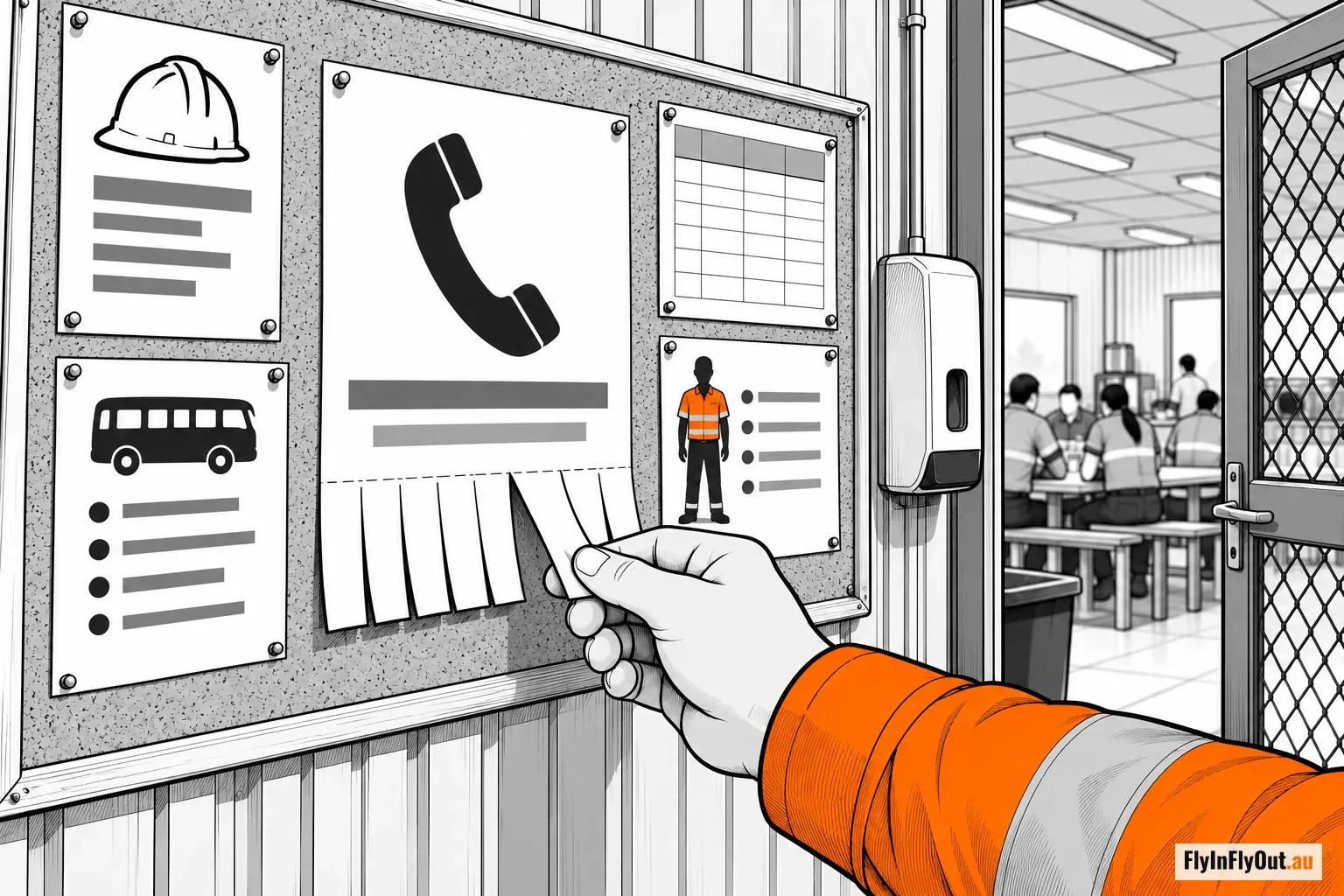
Three quarters of the workers in the study could name some kind of help on site. Of those who answered, six in ten named the EAP, but fewer than three in ten named a helpline. Those who did get help went most often to family and friends, then the EAP and a GP.
Interviewees saw the EAP as part of the company and worried it wouldn't stay confidential, and some kept away from site health staff for fear of losing their job. WA's parliamentary inquiry in 2015 heard the same fear, known as "the window seat": being flown out with no job to come back to.
EAP counsellors usually work for an outside company, not the mine. EAP providers say they don't tell your employer who called or what was said, unless you agree or someone's safety is at serious risk.
What is being done about FIFO mental health?
Short answer
FIFO mental health in WA is covered by a 2019 code of practice, which followed a 2015 parliamentary inquiry. It sets out what employers should do, from rosters with time to recover to reliable ways to call home.
The FIFO mental health report, the inquiry and the code
The 2015 inquiry (opens in a new tab), by a committee of WA's parliament, received more than 130 submissions. It recommended a code of practice, and a legal duty on mine managers to report every suicide and attempted suicide at a mine, camps included, to the regulator. A 2018 report on FIFO mental health, done for the WA government, made 18 recommendations, almost all for employers.
The code of practice (opens in a new tab) for mentally healthy FIFO workplaces sets out what a WA employer should do: rosters that allow rest and recovery, quiet sleeping quarters, predictable rooms and recreation with a social side. Where phone coverage is poor, it says the internet should cope at busy times.
The code still applies under WA's newer work health and safety law. It's guidance, but a court may rely on it to decide what an employer could reasonably have done, so if your site does none of it, the code is the document to name.
Can you be happy working FIFO and look after your mental health?
Short answer
FIFO happiness is possible, says a 2018 study of more than 3,000 FIFO workers. Once age, education and job were allowed for, FIFO workers were as happy and satisfied with life as other workers. Workers did better with good leaders and enough time off to recover.
Interviewees who had a good experience of their employer, their leaders and the way their work was set up described feeling engaged, satisfied and happy at work.
The study's former FIFO workers had mostly left for family, the stress of being away, or because a project ended, and they said they felt better since leaving. Their distress scores, though, were about as high as current workers', and the study couldn't say why. If the job has worn you down, it's worth getting help for that whether you stay or go.
Is FIFO right for your mental health?
Three honest questions
- Which roster are you being offered? If it is 2:1 or longer, ask what the next roster is and when you could move to it.
- Who will you talk to, and how? Decide the call before the first swing: the person, the time, and an app that works on bad internet. The partner needs a plan too.
- What is the money for, and when is it enough? Write both down. In interviews for a WA government study in 2018, many workers warned about the "golden handcuffs" of debt that keeps you in the job. They rated a plan, savings and an exit date among the most important advice for anyone starting.
If today is the bad day
Ring one of these, then tell someone on site and one person at home. You don't need a reason to call.
Still weighing it up? The other question is whether the life fits. Six questions, three minutes, free.
Is FIFO right for me?